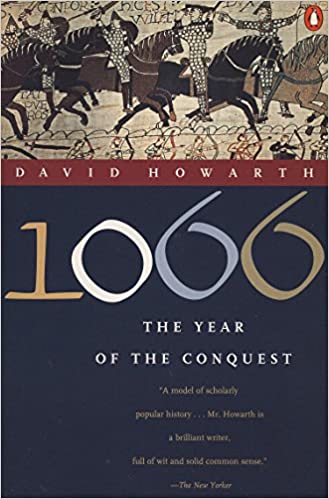
1066: The Year of the Conquest
The year 1066 is one of the most important dates in the history of the Western world: the year William the Conqueror defeated the English at the Battle of Hastings and changed England and the English forever.
The events leading to-and following-this turning point in history are shrouded in mystery. Distorted by the biased accounts written by a subjugated people, many believe it was the English who ultimately won the battle, since the Normans became assimilated into the English way of life.
Drawing on a wealth of contemporary sources, David Howarth gives us memorable portraits of the kings: Edward the Confessor, Harold of England, William of Normandy, as well as the leading political figures of the time. Howarth describes the English commoners: how they worked, fought, died, and how they perceived the overthrow of their world from their isolated shires.
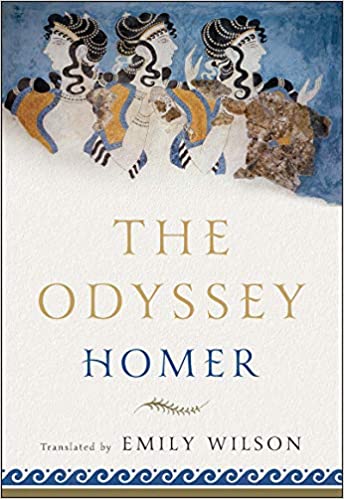
More info →The Odyssey, translated by Emily Wilson
Composed at the rosy-fingered dawn of world literature almost three millennia ago, The Odyssey is a poem about violence and the aftermath of war; about wealth, poverty and power; about marriage and family; about travelers, hospitality, and the yearning for home.
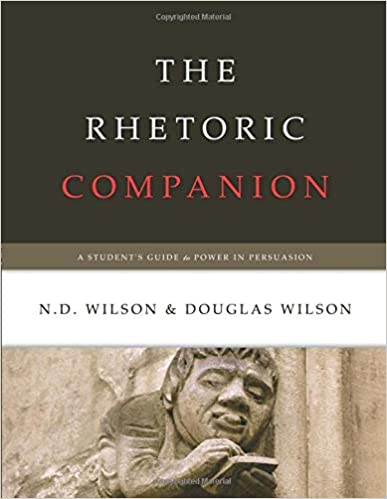
More info →The Rhetoric Companion: A Student’s Guide to Power in Persuasion
For the Christian student of rhetoric, manipulative sophistry is clearly out of bounds. But putting careful thought into what constitutes eloquent speech and persuasive argument is not. What many people dismiss as a bunch of rhetoric is simply poor rhetoric. There is a Christian approach to the craft of memorable and effective expression, and it is the task of this book to lay out that approach.
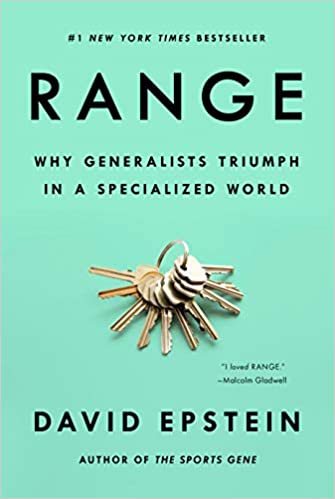
More info →Range: Why Generalists Triumph in a Specialized World
Plenty of experts argue that anyone who wants to develop a skill, play an instrument, or lead their field should start early, focus intensely, and rack up as many hours of deliberate practice as possible. If you dabble or delay, you’ll never catch up to the people who got a head start. But a closer look at research on the world’s top performers, from professional athletes to Nobel laureates, shows that early specialization is the exception, not the rule.
David Epstein examined the world’s most successful athletes, artists, musicians, inventors, forecasters and scientists. He discovered that in most fields—especially those that are complex and unpredictable—generalists, not specialists, are primed to excel. Generalists often find their path late, and they juggle many interests rather than focusing on one. They’re also more creative, more agile, and able to make connections their more specialized peers can’t see.
Provocative, rigorous, and engrossing, Range makes a compelling case for actively cultivating inefficiency. Failing a test is the best way to learn. Frequent quitters end up with the most fulfilling careers. The most impactful inventors cross domains rather than deepening their knowledge in a single area. As experts silo themselves further while computers master more of the skills once reserved for highly focused humans, people who think broadly and embrace diverse experiences and perspectives will increasingly thrive.
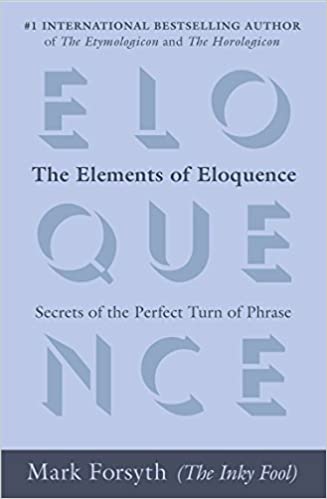
More info →The Elements of Eloquence: Secrets of the Perfect Turn of Phrase
From classic poetry to pop lyrics, from Charles Dickens to Dolly Parton, even from Jesus to James Bond, Mark Forsyth explains the secrets that make a phrase—such as “O Captain! My Captain!” or “To be or not to be”—memorable.
More info →Prisoners of Geography: Ten Maps That Explain Everything About the World (Politics of Place)
Offering “a fresh way of looking at maps” (The New York Times Book Review), Marshall explains the complex geo-political strategies that shape the globe. Why is Putin so obsessed with Crimea? Why was the US destined to become a global superpower? Why does China’s power base continue to expand? Why is Tibet destined to lose its autonomy? Why will Europe never be united? The answers are geographical. “In an ever more complex, chaotic, and interlinked world, Prisoners of Geography is a concise and useful primer on geopolitics” (Newsweek) and a critical guide to one of the major determining factors in world affairs.
More info →Beauty for Truth’s Sake: On the Re-enchantment of Education
Based in the riches of Christian worship and tradition, this brief, eloquently written introduction to Christian thinking and worldview helps readers put back together again faith and reason, truth and beauty, and the fragmented academic disciplines. By reclaiming the classic liberal arts and viewing disciplines such as science and mathematics through a poetic lens, the author explains that unity is present within diversity. Now repackaged with a new foreword by Ken Myers, this book will continue to benefit parents, homeschoolers, lifelong learners, Christian students, and readers interested in the history of ideas.
More info →To Kill a Mockingbird
One of the most cherished stories of all time, To Kill a Mockingbird has been translated into more than forty languages, sold more than forty million copies worldwide, served as the basis for an enormously popular motion picture, and was voted one of the best novels of the twentieth century by librarians across the country. A gripping, heart-wrenching, and wholly remarkable tale of coming-of-age in a South poisoned by virulent prejudice, it views a world of great beauty and savage inequities through the eyes of a young girl, as her father—a crusading local lawyer—risks everything to defend a black man unjustly accused of a terrible crime.
More info →Adorning the Dark: Thoughts on Community, Calling, and the Mystery of Making
From the bestselling author of The Wingfeather Saga and award-winning musician and storyteller, Andrew Peterson.
Christianity Today, The Gospel Coalition, WORLD Magazine each named Adorning the Dark as one of their books of the year.
Making something beautiful in a broken world can be harrowing work, and it can’t be done alone.
Over the last twenty years, Andrew Peterson has performed thousands of concerts, published four novels, released ten albums, taught college and seminary classes on writing, founded a nonprofit ministry for Christians in the arts, and executive-produced a film—all in a belief that God calls us to proclaim the gospel and the coming kingdom using whatever gifts are at our disposal. He’s stumbled along the way, made mistake after mistake, and yet has continually encountered the grace of God through an encouraging family, a Christ-centered community of artists in the church, and the power of truth, beauty, and goodness in Scripture and the arts.
While there are many books about writing, none deal first-hand with the intersection of songwriting, storytelling, and vocation, along with nuts-and-bolts exploration of the great mystery of creativity. In Adorning the Dark, Andrew describes six principles for the writing life:
- serving the work
- serving the audience
- selectivity
- discernment
- discipline
- and community
Through stories from his own journey, Andrew shows how these principles are not merely helpful for writers and artists, but for anyone interested in imitating the way the Creator interacts with his creation.
This book is both a memoir of Andrew’s journey and a handbook for artists, written in the hope that his story will provide encouragement to others stumbling along in pursuit of a calling to adorn the dark with the light of Christ.
More info →The Convivial Homeschool: Gospel Encouragement for Keeping Your Sanity While Living and Learning Alongside Your Kids
Homeschool days can be long and hard. It's easy to lose sight of what's actually happening in the midst of the day to day. Even when we lose our vision, God does not lose His. While we attempt to teach and disciple our children, we find that it is ourselves needing the instruction and discipleship. We also find that God provides both, using our decision to homeschool to draw us closer to Himself. To continue with love and perseverance, we need confidence not in our work but in God’s. These thirty readings will lift up your eyes and spirit so you can focus on what truly matters while doing the daily work of educating your kids.
More info →When: The Scientific Secrets of Perfect Timing
Everyone knows that timing is everything. But we don't know much about timing itself. Our lives are a never-ending stream of "when" decisions: when to start a business, schedule a class, get serious about a person. Yet we make those decisions based on intuition and guesswork.
Timing, it's often assumed, is an art. In When: The Scientific Secrets of Perfect Timing, Pink shows that timing is really a science.
Drawing on a rich trove of research from psychology, biology, and economics, Pink reveals how best to live, work, and succeed. How can we use the hidden patterns of the day to build the ideal schedule? Why do certain breaks dramatically improve student test scores? How can we turn a stumbling beginning into a fresh start? Why should we avoid going to the hospital in the afternoon? Why is singing in time with other people as good for you as exercise? And what is the ideal time to quit a job, switch careers, or get married?
In When, Pink distills cutting-edge research and data on timing and synthesizes them into a fascinating, readable narrative packed with irresistible stories and practical takeaways that give readers compelling insights into how we can live richer, more engaged lives.
More info →