King Richard II
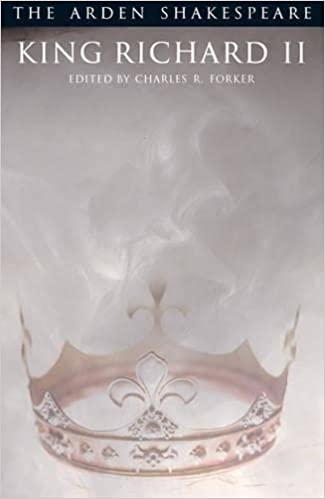
This richly annotated edition takes a fresh look at the first part of Shakespeare's second tetralogy of history plays, showing how it relates to the other plays in the sequence. Forker places the play in its political context, discussing its relation to competing theories of monarchy, looking at how it faced censorship because of possible comparisons between Richard II and Elizabeth I, and how Bolingbroke's rebellion could be compared to the Essex rising of the time. This edition also reconsiders Shakespeare's use of sources, asking why he chose to emphasise one approach over another. Forker also looks at the play's rich afterlife, and the many interpretations that actors and directors have taken. Finally, the edition looks closely at the aesthetic relationship between language, character, structure and political import.
More info →King Lear
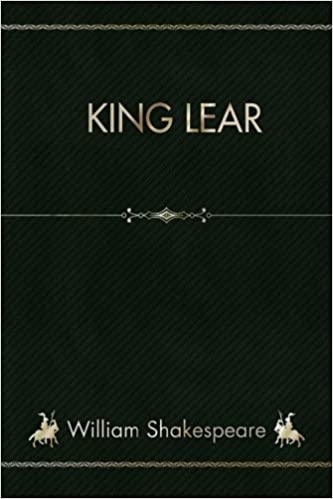
King Lear is considered one of Shakespeare's greatest plays. King Lear decides to step down and divide his kingdom between his three daughters. When his youngest and favorite daughter refuses to compete and perform her love for him, he is enraged and disowns her. She remains loyal to him, however, though he slides into madness and his other children betray him.
More info →The Promise
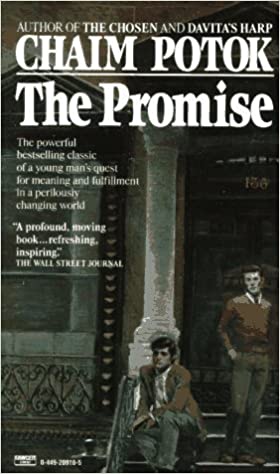
Young Reuven Malter is unsure of himself and his place in life. An unconventional scholar, he struggles for recognition from his teachers. With his old friend Danny Saunders--who himself had abandoned the legacy as the chosen heir to his father's rabbinical dynasty for the uncertain life of a healer--Reuvan battles to save a sensitive boy imprisoned by his genius and rage. Painfully, triumphantly, Reuven's understanding of himself, though the boy change, as he starts to aproach the peace he has long sought....
More info →The Chosen
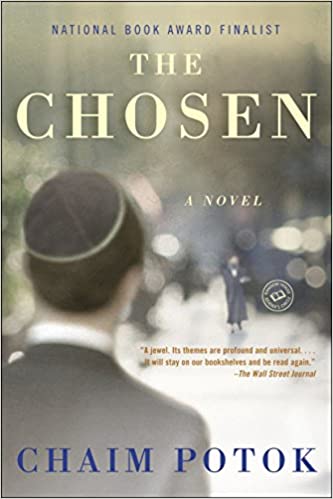
It is the now-classic story of two fathers and two sons and the pressures on all of them to pursue the religion they share in the way that is best suited to each. And as the boys grow into young men, they discover in the other a lost spiritual brother, and a link to an unexplored world that neither had ever considered before. In effect, they exchange places, and find the peace that neither will ever retreat from again. . . .
More info →A River Runs Through It
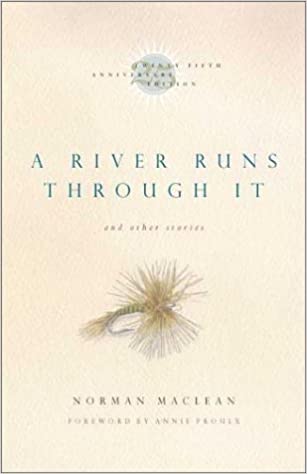
From its first magnificent sentence, "In our family, there was no clear line between religion and fly fishing", to the last, "I am haunted by waters", A River Runs Through It is an American classic.
Based on Norman Maclean's childhood experiences, A River Runs Through It has established itself as one of the most moving stories of our time; it captivates readers with vivid descriptions of life along Montana's Big Blackfoot River and its near magical blend of fly fishing with the troubling affections of the heart.
More info →The Communist Manifesto
“Let the ruling classes tremble at a Communistic revolution. The proletarians have nothing to lose but their chains. They have a world to win. Workingmen of all countries unite!” ― Karl Marx, The Communist Manifesto
This pocket edition is designed to be convenient enough to easily fit in a pocket, purse, briefcase or backpack, but with text large enough that it is easy to read, and margins large enough to be marked up by students of any age. This new edition, reproducing the 1888 authorized English translation of Marx and Engels's work of political theory. The translation in this edition is the translation authorized by Engels, by Samuel Moore (1838-1911).
The Communist Manifesto (officially Manifesto of the Communist Party) is an 1848 political manifesto by German philosophers Karl Marx and Friedrich Engels that laid out the program of the Communist League. Originally published in German (as Manifest der kommunistischen Partei) just as the revolutions of 1848 began to erupt, the Manifesto has since been recognized as one of the world's most influential political manuscripts.
It presents an analytical approach to the class struggle (historical and present) and the problems of capitalism and the capitalist mode of production, rather than a prediction of Communism's potential future forms. The Communist Manifesto contains Marx and Engels' theories about the nature of society and politics, that in their own words, "The history of all hitherto existing society is the history of class struggles". It also briefly features their ideas for how the capitalist society of the time would eventually be replaced by socialism, and then finally Communism.
More info →The Great Divorce
C.S. Lewis’ The Great Divorce is a classic Christian allegorical tale about a bus ride from hell to heaven. An extraordinary meditation upon good and evil, grace and judgment, Lewis’s revolutionary idea in the The Great Divorce is that the gates of Hell are locked from the inside. Using his extraordinary descriptive powers, Lewis’ The Great Divorce will change the way we think about good and evil.
More info →The Adventures of Pinocchio
The story of the wooden puppet who learns goodness and becomes a real boy is famous the world over, and has been familiar in English for over a century. From the moment Joseph the carpenter carves a puppet that can walk and talk, this wildly inventive fantasy takes Pinocchio through countless adventures, in the course of which his nose grows whenever he tells a lie, he is turned into a donkey, and is swallowed by a dogfish, before he gains real happiness.
This new translation does full justice to the vibrancy and wit of Collodi's original. Far more sophisticated, funny, and hard-hitting than the many abridged versions (and the sentimentalized film) of the story would suggest, Ann Lawson Lucas's translation captures the complexity of Collodi's word-play, slapstick humour, and immediacy of dialogue. An adult reader will recognize social and political satire, and the invaluable introduction and notes illuminate the cultural traditions on which Collodi drew.
More info →Post-Christian: A Guide to Contemporary Thought and Culture
Undaunted Hope in a Post-Christian World
We live in a post-Christian world. Contemporary thought―claiming to be “progressive” and “liberating”―attempts to place human beings in God’s role as creator, lawgiver, and savior. But these post-Christian ways of thinking and living are running into dead ends and fatal contradictions.
This timely book demonstrates how the Christian worldview stands firm in a world dedicated to constructing its own knowledge, morality, and truth. Gene Edward Veith Jr. points out the problems with how today’s culture views humanity, God, and even reality itself. He offers hope-filled, practical ways believers can live out their faith in a secularist society as a way to recover reality, rebuild culture, and revive faith.
More info →