SS #62: The Scholé Sisters Go Liberal (with Ravi Jain!)
We’re thrilled to have Ravi Jain back on the show today.
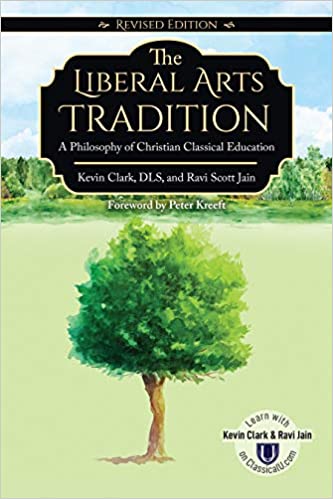
In today’s episode, we get some of the background on the new edition of The Liberal Arts Tradition. The revisions come from a clearer sense of what Christian classical education actually is, what it is for, and what it must refuse to become.
Three needs drove the rewrite:
- a more robust account of the liberal arts of language
- a recovered center of gravity: the church
- a more faithful treatment of virtue
Alongside these, the second edition aims for greater clarity by refusing to hedge where the authors now believe they should “put a stake in the ground.”
After this, we dive deeply into the curriculum section from the new edition and talk about the fine arts, the servile arts, and the liberal arts. You’re going to love hearing Ravi’s thoughts!
What are the liberal arts?
Today’s Hosts and Source

Brandy Vencel

Mystie Winckler

Pam Barnhill
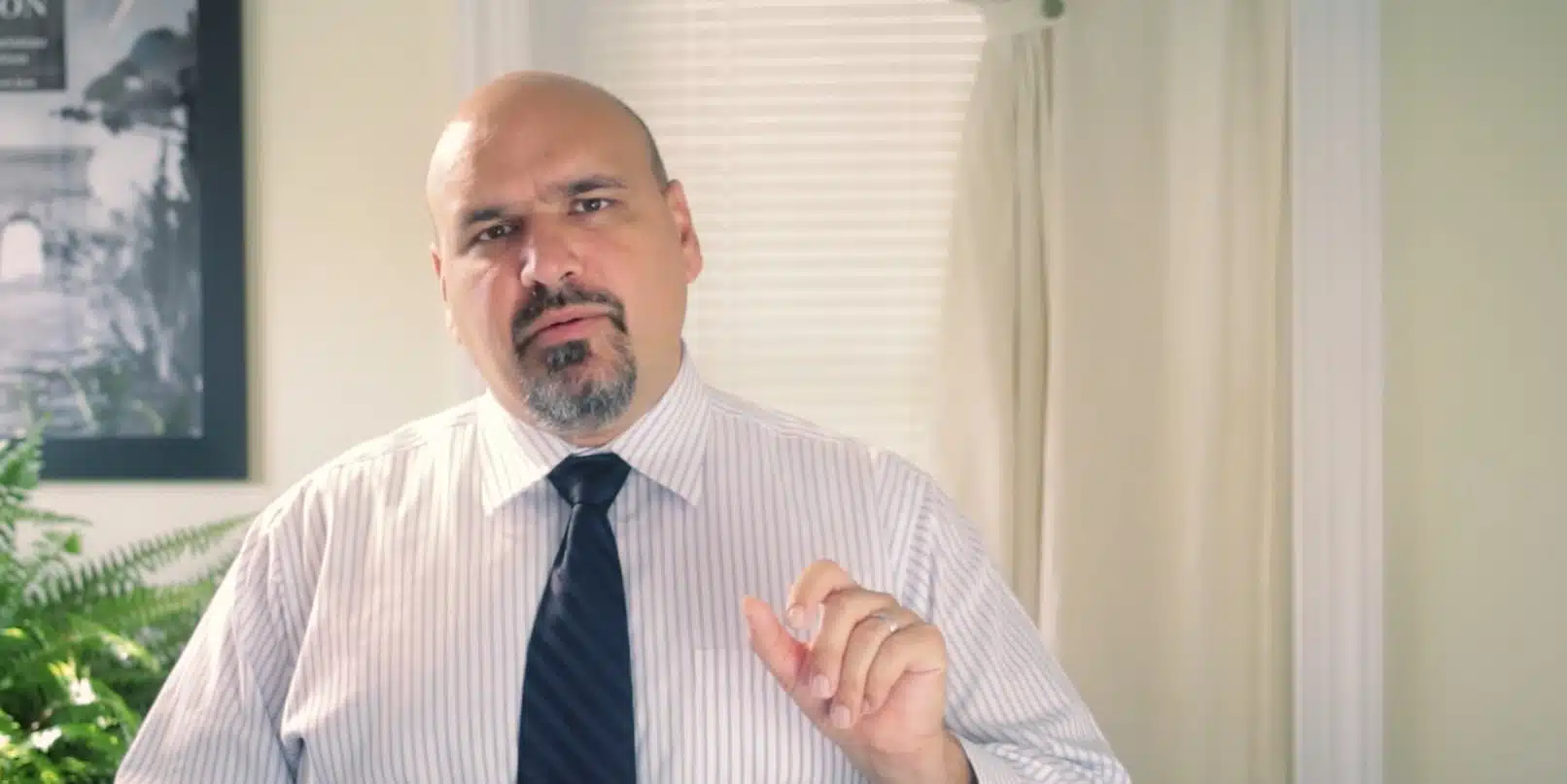
Ravi Jain graduated from Davidson College, received an M.A. from Reformed Theological Seminary, and later earned a Graduate Certificate in Mathematics from the University of Central Florida.
He began teaching Calculus and Physics at the Geneva School in 2003 where he has developed an integrated double period class called “The Scientific Revolution.” In this class the students read primary sources like Galileo and Newton in order to recapitulate the narrative of discovery while preserving the mathematical and scientific rigor expected of a college level treatment.
He has given over 100 talks and workshops throughout the country and overseas on topics related to education, theology, mathematics, and science. He has two boys, Judah and Xavier, and is married to Kelley Anne, whom he met in Japan.
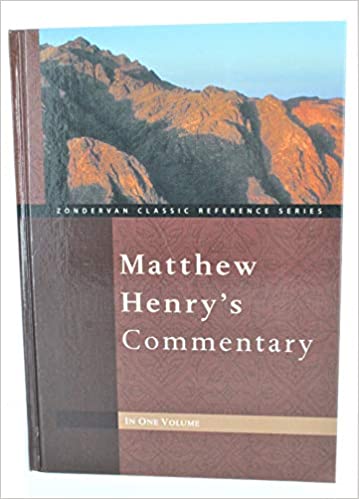
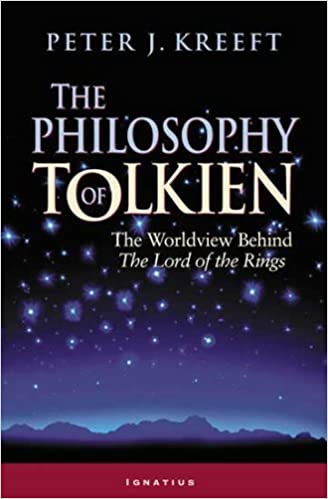
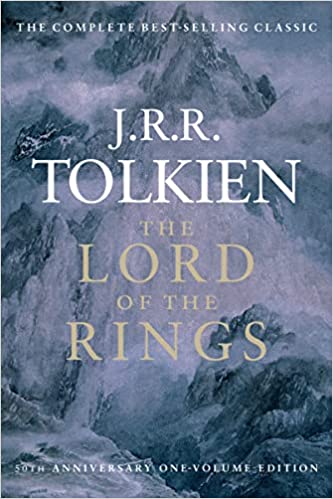
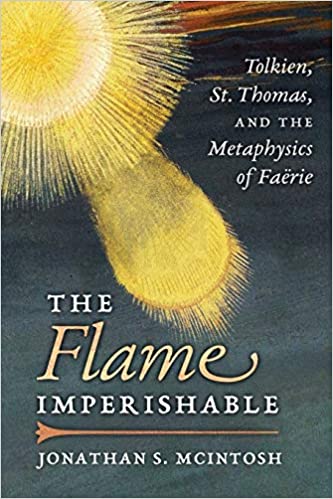
Scholé Every Day: What We’re Reading



The liberal arts of language
A second edition became an opportunity to strengthen the conceptual spine: not adding fluff, but developing what had not yet reached full articulation. Christian classical education cannot remain vague about language, because language is not merely a school skill.
Language is one of the primary ways reality breaks through to us. If we handle language thinly, we train students to treat words as tools for utility, not as instruments for truth, wisdom, and worship-shaped meaning.
Christian classical education is not “Western.” It is ecclesial.
A major pressure point arrived through contact with Chinese Christians building classical schools—dozens of schools, with hundreds of educators, and broad pastoral support. Their interest raised a hard question: why would Chinese Christians pursue something often packaged as “Western Christian education”?
The answer was not that they wanted Westernness. It was that they understood education as formation and recognized that much modern education functions as propaganda.
They were looking for an inherited Christian way of forming loves and shaping souls. They saw that the church has historically carried such a formation, and they perceived Christian classical educators as those closest to recovering it.
This reframes the whole project. The tradition is not “ours” because we are Western. It is ours because we are in Christ.
If Chinese Christians name sons Asa and we name sons Judah, the point is not cultural borrowing. The point is shared inheritance. We are grafted into the same Abrahamic story.
We share the church’s cultural memory and responsibility. Western culture is not Jerusalem. England is not Greece. Germany is not Rome. Yet Christian peoples received, preserved, and developed the church’s inheritance in their places. What matters is not a nation’s prestige, but the church’s continuity.
This confrontation with Chinese educators exposed what the first edition lacked: a sufficiently explicit account of the church’s role. The second edition does not simply defend classical education as a Western project. It attempts to name it more accurately as a church-shaped formational project.
Virtue must be treated as Christian maturity, not as a rival category
A third missing piece was virtue. Early exposure to “virtue talk” in Christian classical education can create a false divide: on one side, “growth in Christ,” and on the other side, “the virtues” as a Greco-Roman add-on—almost like a parallel track to sanctification.
That framework will not do.
The revised treatment of virtue insists that Christians historically have spoken of virtue in profoundly biblical ways—not as works righteousness and not as an alternate route to God, but as the lived reality of “working out salvation” as God works in us.
The tradition of virtue is not an embarrassment to be tolerated; it is something Christians have historically redeemed and integrated because it describes what sanctification looks like on the ground.
So the second edition aims to clarify virtue as part of formation that is genuinely Christian—grounded in Christ, shaped by Scripture, and understood through the church’s long experience of discipleship.
Why clarity requires courage
Readers asked whether owning the first edition is “enough.” The simplest honest answer offered in the episode is: yes, buy the second edition, because it contains significant new material (the publisher estimates the book is about 40% larger) and because it resolves questions the first edition left unresolved.
But the deeper reason is not page count. It is the decision to stop equivocating.
The authors describe a shift: in the second edition they say what they actually think, even if some readers like the first edition’s ambiguity. Clarity can cost you fans. Yet clarity also serves readers who sensed things “didn’t make sense” because the argument would not quite come to conclusions.
The second edition aims to answer what had been left hanging, and to do so in a way that provokes real dialogue rather than vague admiration.
One example mentioned is a footnoted connection between paideia and baptismal vows, particularly in the context of infant baptism. This will not land the same way for everyone. But it shows the kind of move the authors are now willing to make: drawing lines between Christian educational responsibility and explicitly ecclesial commitments.
Another example is tying paideia not to a “Greek-versus-Hebrew” rivalry but to the Hebrew tradition, specifically the Shema, resisting the simplistic slogan “Hebrew good, Greek bad.” The argument assumes continuity: when Paul uses paideia in Ephesians, he is evoking Deuteronomy-shaped formation, not importing a rival civilization.
The three arts: serving, knowing, and beautifying
To clarify where education lives, the episode distinguishes three categories of arts that mutually inform each other:
Survival arts (common arts)
These are the arts of service—things ordered to bodily and communal needs. They include areas like architecture, agriculture, medicine, commerce, defense, and even theater in some historic lists. They are “technology” in an older sense: not the modern posture of domination and convenience, but work aligned with the grain of nature and the needs of a community.
Liberal arts
These cultivate the soul’s capacities—understanding, judgment, wisdom. If common arts produce goods and services, liberal arts produce knowledge and insight. The arts of language and mathematics train us to perceive reality more clearly and to pursue wisdom, not merely information.
Fine arts
These are the arts of beauty—what perfects and elevates the other arts by shaping taste, perception, and fittingness. If geometry helps an architect make a building stand, the fine arts help the architect make it worthy to behold. The fine arts teach us to recognize and render beauty, which affects the whole human person.
The episode notes that “fine arts” as a distinct third category is not always explicit across history. Ancient authors divided the arts in many different ways (useful vs pleasurable, productive vs imitative, liberal vs vulgar, theoretical vs practical, etc.). Yet the impulse remains consistent: human making can be ordered toward need, toward knowing, and toward beauty—and those ends must be held together, not separated into rival camps.
Festival, leisure, and the capacity to celebrate reality
This discussion turns from categories to an interior question: what kind of person can receive education as formation rather than as mere function?
A key claim is that leisure (the “true school” required for liberal learning) depends on capacity for festival.
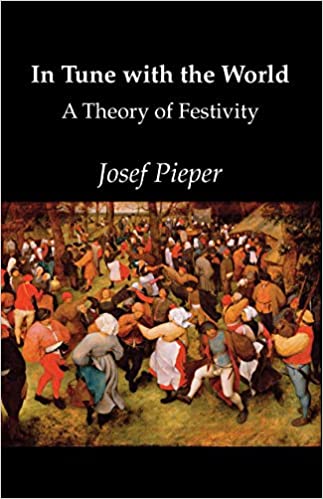
Festival is not a quirky event with costumes. It is the ability to affirm reality as meaningful—cosmic, communal, embodied—and to participate in goodness, truth, and beauty together. It is not identical to worship service, yet it is related. It belongs to a world where feasts exist, where ordinary time exists, and where celebration is disciplined by a calendar of meaning rather than a calendar of entertainment.
Modern approximations—rock concerts and football games—hint at what festival can be, but they are often compromised and unsatisfying because they are not finally anchored in true mystery. They are engineered, predictable, and sometimes hollow. The longing for festival is real, but it must be purified and re-centered.
Festival can be reclaimed in small, local, embodied ways. A school’s “field day” becomes a kind of festival when it is not just diversion but an expression of shared loves and shared knowledge—when a parade becomes a chance to play with what we honor, and to enjoy community around what is actually worth honoring.
Contemplation is the bridge between liberal arts and festival
Liberal learning is not merely skill acquisition. It is a posture where reality breaks through and awakens wonder:
- words become potent, layered, and moving
- numbers become mysterious, not just useful
- nature becomes meaningful, not just controllable
When we perceive the world as mysterious and true, we become capable of real festival rather than manufactured excitement.
Work belongs to festival, not against it
A crucial corrective appears for homemakers in particular: the common arts—the work of preparation, the cooking, the cleanup—are not a regrettable obstacle before the “real” celebration begins. Work is part of the meaning. The Christian tradition does not treat bodily labor as a lower-class annoyance to be offloaded so the “real thinkers” can do the liberal arts.
The monastic pattern of work and pray offers a reordering. We do not need to imitate the Greek leisure class, where others do the work and the elite contemplate. We need a Christian integration where embodiment is honored and daily labor is not despised. We will be resurrected bodies. Education and festivity must therefore take embodiment seriously.
This reframes a common modern temptation: wanting festival without the work of love that makes it possible. The desire to escape the dishes is not always just fatigue. Sometimes it is resistance to the embodied service that festival requires.
Classical schools and the recovery of the common arts inside “science”
A practical question arises: homeschool life naturally includes the common arts—chores, making, maintaining, serving. Do classical schools have an equivalent, or does it all happen “outside school”?
The episode uses science teaching to expose the problem.
Many families expect science class to deliver technology: how CD players work, how to build rockets, how to control the material world.
That is a real trajectory, but it is not identical to natural philosophy or wisdom about nature. The answer is not to reject technology outright, but to re-situate technological learning inside the common arts so it is understood as service and craft, not merely control.
Examples given include:
- making lye from wood ash (an ancient chemical practice)
- building a pendulum clock (a physics project that belongs to craft and timekeeping)
These projects aim to reconnect science to human making and communal life, rather than treating it as disembodied abstraction or as consumer-tech fascination. In younger grades especially, the episode suggests the common arts can have a large role, with the deeper “knowledge of causes” developing later.
A forthcoming book project is mentioned—A New Natural Philosophy—with a chapter included as an appendix in the second edition and a planned publication timeline, developed with co-authors and with an eye toward classroom embodiment.
Mentioned in the Episode

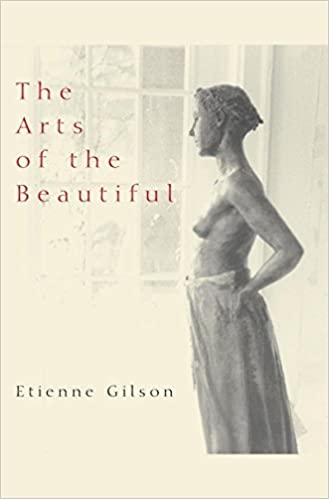
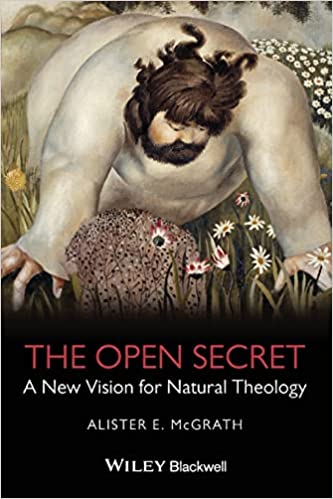
Listen to related episodes:
No posts
Be a part of the conversation!
Discuss this podcast with other moms inside Sistership.
3 Comments
Comments are closed.