
SS #35: What Is Twaddle?
On today’s episode, Mystie, Pam, and Brandy have a rousing discussion on the subject of twaddle. What is it? What isn’t it? Is it ever acceptable? Some of us have unconventional opinions on this subject.
What is twaddle?
Today’s Hosts and Source
Brandy Vencel
Mystie Winckler
Pam Barnhill
The question resolves itself into–What manner of book will find its way with upheaving effect into the mind of an intelligent boy or girl? We need not ask what the girl or boy likes. She very often likes the twaddle of goody-goody story books, he likes condiments, highly-spiced tales of adventure. We are all capable of liking mental food of a poor quality and a titillating nature; and possibly such food is good for us when our minds are in need of an elbow-chair; but our spiritual life is sustained on other stuff, whether we be boys or girls, men or women. By spiritual I mean that which is not corporeal; and which, for convenience’ sake, we call by various names–the life of thought, the life of feeling, the life of the soul.
charlotte Mason, School Education, p. 168
Scholé Every Day: What We’re Reading

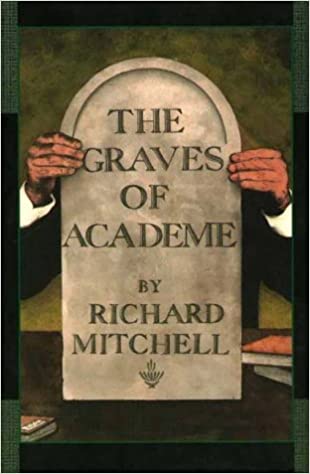


Title – link to page, author
Summary from episode mention.
Title – link to page, author
Summary from episode mention.
Title – link to page, author
Summary from episode mention.

What Is Twaddle?
What is twaddle? What isn’t it? Is it ever acceptable?
These questions can get homeschooling mothers tied up in knots. “Can we read this? Is this twaddle? Can we read it?” It can begin to sound as though letting a child’s eyes fall upon one little speck of twaddle will ruin him for life.
Relax.
There is such a thing as twaddle. There are also books that serve different purposes, simple books that contain living ideas, and times when our minds need what Charlotte Mason called an “elbow chair.” Choosing well requires more than putting every book into one of two buckets.
Twaddle is an actual English word. Charlotte Mason didn’t make it up.
The dictionary definition Mystie brought to the conversation was “trivial or foolish speech or writing; nonsense.” It isn’t thoughtful writing containing living ideas.
But does that mean we have two buckets: living books and twaddle?
Not necessarily.
One way of looking at books is as a spectrum. There is light entertainment, and there is garbage. There are also books containing living ideas that aren’t good ideas. A book’s having ideas doesn’t automatically mean we should read it.
Pam preferred another possibility: there is a twaddle bucket, a living book bucket, and other buckets. A book might not be a living book without automatically becoming twaddle.
There are times when the mind needs somewhere to relax.
That doesn’t make light reading the food that sustains our life of thought, feeling, and soul. But it does give us a reason to stop treating every encounter with a lesser book as a catastrophe.
Brandy’s look at Webster’s 1828 dictionary added another useful angle. There, twaddling meant talking much and idly: gabbling, chattering, carrying on like a gossip.
That brought us back to shallow writing, talking down to children, and appealing to the lowest common denominator.
It also helped distinguish twaddle from other kinds of poor writing. A dense academic book might be lifeless because its author has dissected the subject until no one wants to look at the mess. Inflated language might conceal confused thinking. Those are problems, but they aren’t necessarily the same problem as superficial chatter.
There are more than two categories of books.
Are Textbooks and Reference Books Twaddle?
Sometimes the search for living books becomes a reason to close off an entire subject.
“I can’t find a living book, so we’re just going to skip that.”
But sometimes we have to compromise. Perhaps there isn’t an ideal way to learn a language or a living book available on a particular subject. That doesn’t mean the subject has no place in our children’s education.
When we talk about generational work, perhaps our child will be the one who comes back and writes the living book. First, he may need to learn the subject through a textbook.
Reference books have their place, too.
Pam mentioned Usborne books: handy nonfiction books with pictures, captions, and facts. They might raise an interest in ancient Egypt or help a child look something up. They aren’t necessarily what you would build your study around, but that doesn’t make them worthless.
Mystie’s children enjoyed Eyewitness books for flipping through or finding something to copy into a Book of Centuries. Brandy remembered a book of trucks from which one of her boys learned the name of every truck in the world.
A Bible atlas serves a similar purpose. You might pull it out to see the Jordan River or a particular kind of pottery. You wouldn’t build your whole lesson around it, but it is useful for what it does.
Textbooks also need to be evaluated individually. Some might be twaddly. Some might be well written. Some might even be living.
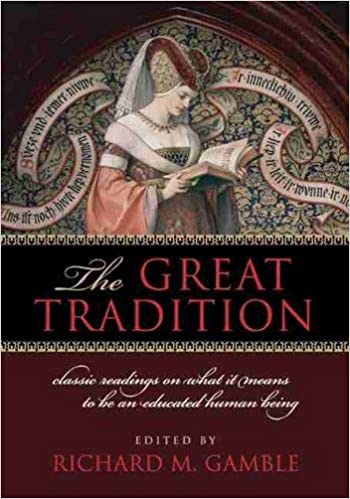
Pam remembered The Lively Art of Writing by Lucile Vaughan Payne, a living book she had used in high school. She still remembered what it taught her about writing. It had one author, personality, and real-life examples.
The biology textbook The Riot and the Dance prompted a similar discussion. Its author has personality and is clearly passionate about his subject. Covering a subject’s scope and sequence didn’t automatically make the writing bad.
We also considered whether a teacher could use factual material to teach a living lesson. That requires something from the teacher, and we don’t all know enough about every subject to supply it ourselves. But Handbook of Nature Study offered an example of a resource a teacher could read and then communicate through conversation.
A textbook doesn’t necessarily equal twaddle—or living. We have to evaluate it.
The Value of Early Readers
Simple does not necessarily equal twaddle, either.
A child’s picture book can be very sweet, very simple, and very living. Complexity doesn’t automatically make a book living, either.
The discussion of books based on movies or franchised characters raised another distinction. A series isn’t necessarily the same thing as a franchise. Henry and Mudge and Frog and Toad have continuing characters, but that doesn’t make them the same as books produced from a television show.
We also distinguished the original Curious George stories from later versions. In the originals, George disobeys, gets into trouble, and encounters consequences. Mystie found that the newer versions handled his behavior differently—and that the writing was worse.
The Lorax introduces a complex subject in a way children can understand. Even The Cat in the Hat, with its limited vocabulary, ends with a moral question: what would you do if your mother asked you?
Early readers serve a particular purpose. They help children learn to read.
Pam appreciated the All About Reading readers because children could decode the words using what they had already learned. The artwork was good, the stories were enjoyable, and the books gave children reading practice.
There are certainly horrible early readers. Sorting through the library shelves can be depressing. But there are gems, too.
Mystie mentioned Penny and Her Marble by Kevin Henkes. Penny picks up something that isn’t hers, her conscience bothers her, and she returns it. It’s an early reader, but it’s also a story worth reading.
We need those practice books. Their simplicity doesn’t settle their quality.
Goody-Goody Stories Are Twaddle
Does every book have to contain a good moral message or teach a particular subject?
Pam brought up Elephant and Piggie: witty books with very few words in their speech bubbles. She and her son would each read one character. They were clever, funny, and didn’t talk down to children.
I Want My Hat Back prompted a similar discussion. Pam wasn’t calling it a living book, but she appreciated its wit.
There is a place for things that entertain us in a smart way.
That also brought us back to Charlotte Mason’s criticism of goody-goody storybooks. A good book doesn’t require a world where nothing bad happens and everyone always does the right thing.
Are we reading fairy tales, Shakespeare, and the Bible to our children?
Those stories portray a world where situations play out and we learn something about how people and the world work. An artificial world in which everyone is goody-goody doesn’t help children form their moral imagination.
How will they learn to make moral choices if the ideas in their heads suggest that being good is easy or that everyone is trying to be good?
That doesn’t settle every question of what to read at every age. There were cautions and disagreements in the conversation. But avoiding twaddle doesn’t mean every story must portray an artificial world of uninterrupted good behavior.
Learning to Recognize Twaddle
How do we become able to evaluate books?
By reading good books ourselves—and by actually reading the book we’re evaluating.
Exposure breeds taste. What we read shapes what we like and what we want to read next.
That’s one reason the food analogy works so well. When our tastes are out of balance, something good might not appeal to us. Developing a taste for it requires more than announcing that it’s good.
Brandy spoke of “wooing” children toward books, subjects, music, or paintings. That calls for compassion rather than harshness.
We can put interesting books where children will find them. We can model reading. We can introduce small snippets during morning time.
Sometimes a temporary break from fluff can change our tastes, too.
Mystie described reading a great deal of Christian historical romance in high school. She thought she was learning history. Then she went to college as an English major and had time only for the reading assigned in her literature classes.
When she came home for a break, she picked up the newest book in one of her familiar series. Suddenly, it wasn’t very good. She didn’t like it anymore.
Her taste had changed through reading something else.
There isn’t necessarily a big shortcut around developing that discernment. Until we have more experience, we can seek advice from people we trust.
Book lists are a good starting point. After a few years, we may notice that many lists include the same books. We read them, become familiar with them, and they would now appear on our own lists.
But we shouldn’t permanently discount our own ability to choose. After years of reading good books, a mother can pick up a newer book and consider whether it would work for her family.
It doesn’t have to appear on someone else’s list to be worth reading.
Bubble Bath Books
Every once in a while, if your mind needs an elbow chair, you don’t have to feel guilty about picking up something light.
Proportion matters.
If junk food is all you eat, you won’t be healthy—and healthy food may begin to taste strange. But eating mostly good food doesn’t mean an occasional bag of Cheetos will ruin your health.
Pam added another distinction: there’s cheap ice cream, and there’s really good ice cream. Enjoyment itself doesn’t require choosing the worst available option.
That brought us to “bubble bath books” and the Mitford series.
Pam found the books enjoyable, with occasional insights about family and faith, but she wasn’t thinking hard while reading them. Brandy and Mystie questioned whether easy reading necessarily kept them outside the living book category.
If a book gives insight into the human condition and how relationships work, might it be living even if it’s easy to read?
We didn’t resolve that question. Pam continued to argue for an “other” bucket: books that serve a purpose, including smart enjoyment, without necessarily being living books.
But we agreed that a reading diet needs more than one thing.
Mystie was more particular about the books she handed to children who read slowly or in smaller quantities. Her voracious readers had time for more outside the core of good books because they were reading so much.
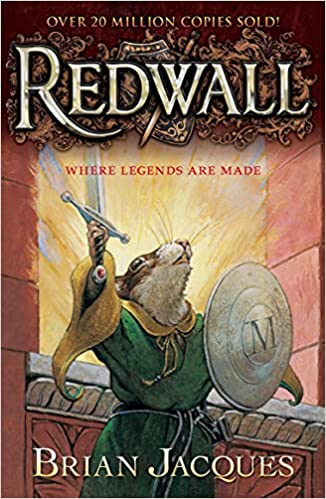
Then there was the child who read only Redwall.
Redwall had helped get him reading, and that was a good thing. Six months later, after he had read the series four times through, it was time to discover that other books existed.
The same book can occupy a different place in different children’s reading lives. One child reads it alongside many other things. Another reads it to the exclusion of everything else.
We have to look at the whole diet.
Being Choosy About Books
Sometimes a reluctant reader needs a book from the “other” bucket to get started.
The child who barely reads might need something appealing enough to draw him in. It’s rather like a child recovering from sickness: if nothing has sounded good for days and he finally asks for french fries, you might go buy the french fries.
But the approach that works for one child may not work for another.
Removing screen time got one of Mystie’s children reading. Pam had a child who, without screens, would simply make things with his hands. He still wouldn’t read.
It’s parenting: watching the needs of your child and trying to troubleshoot.
There isn’t a one-size-fits-all answer. In areas of wisdom, we have to balance different principles and make the best call for a particular child. We also need to know the end goal so we know what we’re troubleshooting toward.
That should make us careful about both giving and receiving advice.
Other people don’t walk in our shoes, and we don’t walk in theirs. Advice from a community of people who know us and know our children can help. When we don’t know someone’s circumstances, general principles may be more useful than detailed instructions.
Our discussion concerned what is and isn’t twaddle, and what kinds of books have a place. A full discussion of what makes a living book—and its value in education—is another conversation.
You should be reading the very best. You don’t have to read only the very best all the time.
And simple does not necessarily equal twaddle. We don’t need to fear a simple book or an older child pulling a picture book back off the shelf. A simple book can be a living book.
Choosing well takes reading, attention, and wisdom—not fear of the other bucket.
Mentioned in the Episode




Listen to related episodes:

SS#165 – Book Club Joy
SS#160 – We wrote a book!

SS #134 – What is the 5×5 Reading Challenge?
SS #100! Book Bash!
Be a part of the conversation!
Discuss this podcast with other moms inside Sistership.
Podcast: Play in new window | Download
I just love you guys!! ???. Your just really “fun guys”. ?.
Hahahahah!
Thanks for this episode. It was really timely! My preschooler loves wit and rhyming (Dr. Suess, Elephant and Piggy) and I’ve been trying to sort through which books are worth our time and which to forego. I really appreciate your humor and humility as you talk about that process!
When we read The Lorax, my daughter was visibly upset about all of the trees disappearing and I was pleased that she was so concerned about protecting God’s creation…until I realized that she was upset because without any trees, the Once-ler family wouldn’t be able to make any more Thneeds. Her favorite part of the book was when “the whole Once-ler family was working full tilt.” #facepalm
Sounds like you have a budding entrepreneur on your hands? Haha!
Love this episode!!
This is a great episode! I had so many thoughts to add, like Suess wrote some things that about just teaching language and language structure. The Foot Book, Hop on Pop, that sort. And then some books are deeper, like The Thinks You Think.
I’ve got to think more about the facts vs ideas. I don’t think that is a clear line, as even the Usborne reference books, which I just LOVE, offer ideas as well as facts (at least as I understand it). Oh, my. I need a discussion of facts vs ideas vs opinions. But then, I live with a philosopher, I should ask him, too.
And, did you know that Underground Grammarian texts (and old newsletters) are all here: https://sourcetext.com/grammarian/ I learned about this guy doing my MA in Linguistics. 😀
Mama Rachael – Here is a place to start with facts vs. ideas: https://pambarnhill.com/ymb25/
I loved listening to this podcast…you gave me so very much to chew on. I had thought I understood what living books were, but I feel like I’m still really unsure. So I totally get what “junk food” books are. But thinking about young children who cannot yet read – picture books – I’m not sure that they fall into the twaddle category when they introduce kids to beautiful illustrations (e.g. Jan Brett) or ideas (e.g. Frog and Toad, and George and Martha are so much about friendship!), as well as those middle grade novels like the Redwall books which help build vocabulary and make readers more fluent so they CAN read greater, rich works of literature. Lol! I just heard the end of your podcast when you mentioned you hadn’t really touched on what is and isn’t a living book :). You should do that podcast too!
Good idea! We will do that topic someday. I just need an equally good name!! 🙂
Just want to thank you so much for emphasizing the importance of in person community (I think it was Pam). As valuable as podcast/FB groups are — including yours– I feel like there is a very concerning trend among homeschool moms to ONLY find community online!
I decided to look up information about elbow chairs and discovered that and elbow chair is a wooden chair with arms. Formal looking in the early 1900’s with very little padding. For example a dining table chair with arms or desk chair with arms, square or barrel shaped. Sometimes I’ve seen them called an occasional chair. Where a standard dining chair one would be expected to sit up strait in, even lean slightly forward–one would never have rested one back against the chair-back of such a chair–It appears an elbow chair is the type one would’ve sat back in occasionally and rested ones elbows on its arms while folding hands in thought.
This makes me laugh. I remember reading once that Miss Mason didn’t want couches for her students because she didn’t want them to get too comfortable. It makes me wonderful if an elbow chair was about as good as it was going to get with her! 😉