
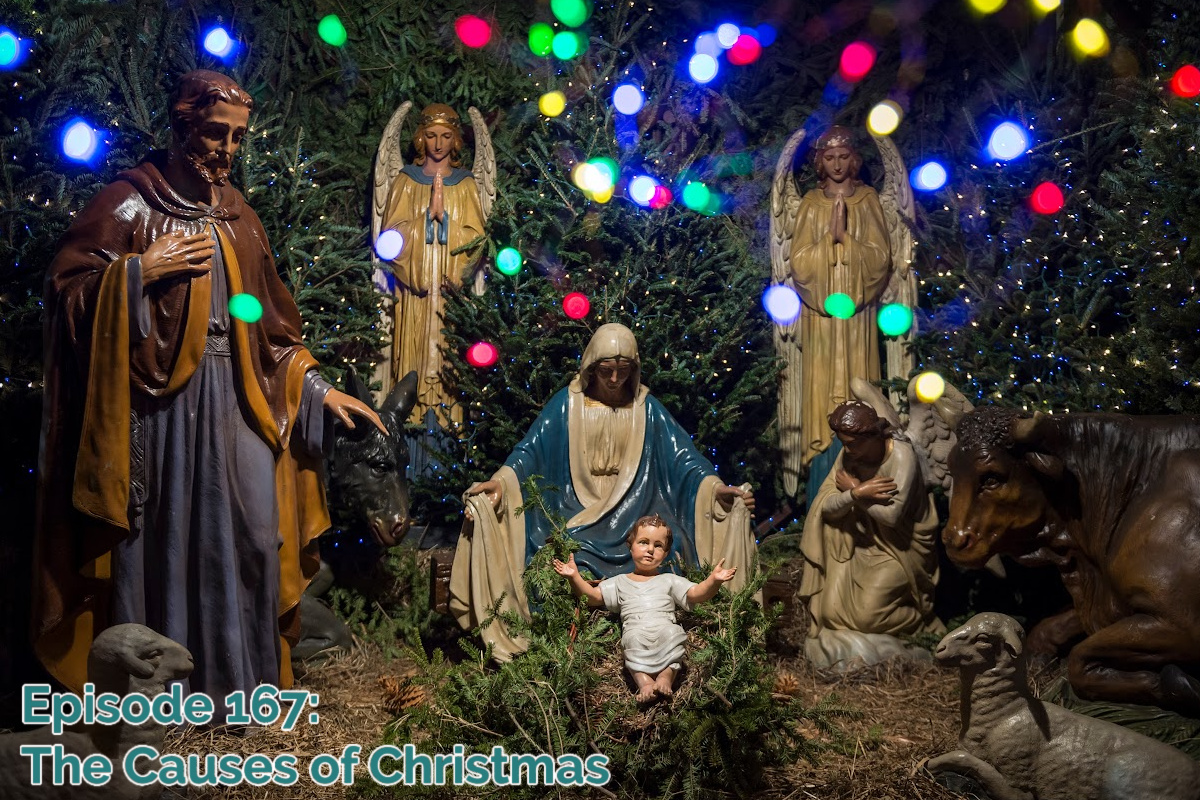
SS#167: The Causes of Christmas
When you’re on your ninth annual Christmas episode, you either repeat yourself or you find a new framework. This year Abby proposed Aristotle’s four causes as a way to think about Christmas without getting shortsighted and without just beating the “Don’t Be a White Witch” drum again. The four causes give a broad, specific structure that helps you round out the conversation and consider what you usually ignore.
The causes are efficient, formal, material, and final—and we worked through them in an order that felt more natural for a Christmas discussion.
The Four Causes of Christmas
Today’s Hosts

Brandy Vencel

Mystie Winckler

Abby Wahl
Scholé Every Day: What We’re Reading

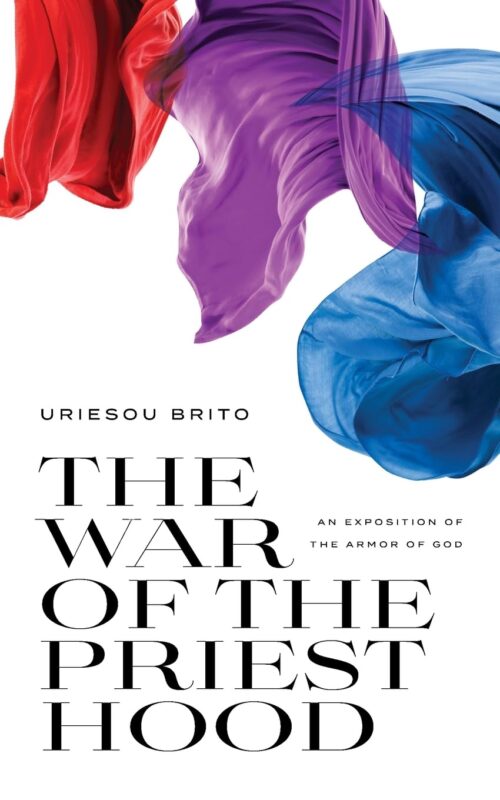


The War of the Priesthood, Urisou Brito
Mystie read this approachable, fascinating take on the armor of God representing not Roman armor, but Jewish priestly garb.
Against the Machine, Paul Kingsnorth
Brandy and Abby raved about this new release on the demise of the West.
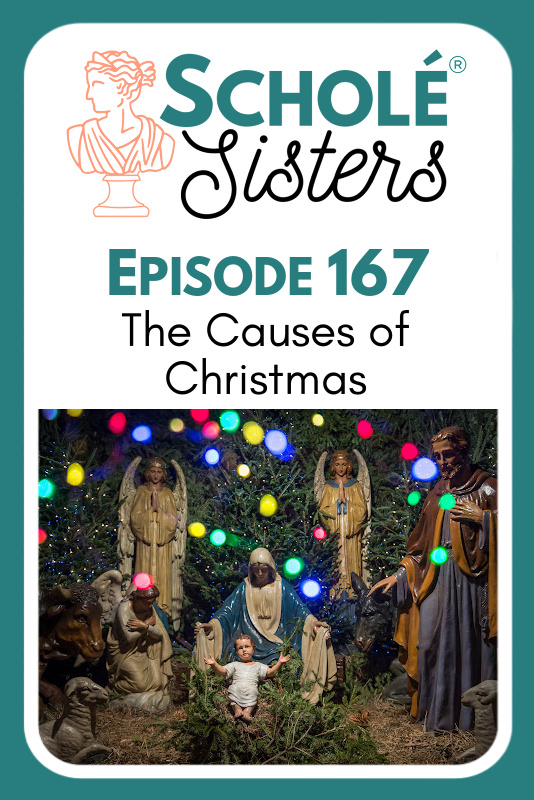
Efficient Cause: Why Have Christmas at All?
Efficient cause is what most people mean by “cause”: something happened, therefore something else exists. In that sense, Christmas exists because Jesus was born. The incarnation and the Nativity are the efficient cause. Without Christ’s first coming, there would be no Christmas.
Why December 25, though? The date is not simply a borrowed pagan winter festival. The early church did do actual math to choose the date: Jesus died on 14 Nisan in the Jewish calendar; Tertullian converted that to March 25 on the Roman calendar; an early church tradition held that Jesus was conceived on the same day he died; that set the Annunciation on March 25, which places the birth nine months later on December 25. Even if some Christian practices replaced or “baptized” pagan customs, that could be understood as evangelizing and redirecting meanings toward Christ.
Through the efficient cause, Aristotle also held that knowledge and mastery inside the artisan made the action possible. From this idea, we framed a Christmas application: for mothers trying to “make Christmas special,” the efficient cause isn’t only the visible actions and traditions. The deeper root is the internal reality that makes Christian celebration possible at all: the Holy Spirit’s work in the heart. Without that, all the accessories and activity are empty.
After all, celebration begins with worship which then feeds leisure, and leisure includes what isn’t merely useful but belongs to full human existence.
Formal cause: What is Christmas?
Formal cause answers, “What is it?”—the form, pattern, or essence of a thing. The question becomes: What kind of thing is Christmas?
Christmas is a festival. It’s a party. It’s a set-apart time that is not mainly about getting somewhere else or producing an outcome, but about enjoyment and worship.
Christmas began as a church calendar day—“Christ’s mass,” a religious service—while today it often feels less tethered to church unless it falls on a Sunday. Part of Christmas Day used to include going to church, yet some churches even cancel Sunday service when Christmas falls on a Sunday, treating it as “family time.” That shift is revealing: we are not using Christmas to worship God.
Brandy made a distinction between a “church holiday” and “cultural holiday” — such a distinction only makes sense in a modern secular society, because culture is religion externalized. A culture formed by religion will naturally produce festivals shaped by what it worships. In reality, secularism is a competing religion.
Material cause: What is Christmas made of?
Material cause answers, “What is it made out of?” This is where we consider the physical, sensory elements of Christmas—the trappings that mark a festival.
Brandy named a recurring concern: attempts to remove the material from Christmas can turn it agnostic and minimal, even while sounding spiritual. We can suffer from a “Scrooge” spirit, contrasted with a biblical example: when Jesus defended costly use of perfume, it showed that marking an occasion with expense can be fitting.
Abundance not as “more presents,” but as a noticeable, over-the-top festivity—something not austere or minimal. Brandy gave a non-Christian illustration from a Castle Christmas episode: a poor single mother still made Christmas special for her son, and later he became extravagant to his capacity. The point wasn’t that wealth makes a better Christmas, but that a festival is often marked by extravagance relative to capacity.
Material traditions extend beyond gifts:
- Christmas lights inside and out, including tiny twinkle lights left up into January because they’re cheerful
- Advent countdowns (felt calendars, paper chains, candy chains)
- Christmas books brought out seasonally
- Individual bedroom trees
- Pine-scented candles
- Nativity sets (with some denominational joking about whether “baby Jesus” appears on the 25th)
- Wise men “traveling” through the house to arrive on Epiphany
- Baking cookies and delivering them—paired with a story of a neighbor in tears because a cookie tasted like his mother’s recipe
- Cinnamon rolls and specific “if you don’t make them, I hear about it” foods
- A real Christmas tree, and even burning it afterward as part of the rhythm
Brandy mentioned Glen Sunshine’s articles on medieval and Victorian/modern Advent and Christmas traditions, including how Christians adopted and redirected things like trees, wreaths, and yule logs over time—sometimes rejecting practices early because of pagan associations, later bringing them in with changed meanings.
After big moves and as children grow, traditions tied to geography, extended family, and young-child rhythms can disappear. Both Brandy and Mystie described the disorientation of moving to new states while also entering the “big kids” season: routines like candy countdowns and daily picture books stop fitting, and the question “What are your family traditions?” becomes awkward to answer. Adjusting to new seasons is not failure but a part of life: you add traditions until you feel overloaded, then clear space—especially as new family members arrive. Material traditions are “constantly in flux.”
Final cause: What is Christmas for?
Final cause asks, “Why?”—the end or purpose. Why have a Christmas festival? What is it for?
Easy: to glorify and enjoy God—a special time of remembrance, worship, and enjoyment of what God has done, especially that God became man to save and dwell with us.
That purpose also reframes the earlier causes: material traditions should serve the final cause. The things are not the point, but they can help. The hosts acknowledged the real competition that can happen, especially with children: “I don’t want you to read the Christmas story; I want to open presents.” But our response shouldn’t be an attempt to “perfectly execute Christmas.” We should use the occasion to disciple our children and “order their loves as they’re growing.” Christmas takes practice—reorientation, again and again.
A Jesse Tree, used as a daily scripture walk from creation through the story of redemption toward Christ’s birth, uses the occasion of Advent and Christmas to daily return to the story of Scripture and promise of Christ.
We can also use music as backdrop, especially Messiah, with the repeated “He shall reign forever and ever… hallelujah,” shaping our homes’ atmospheres toward worship.
Mentioned in the Episode

Listen to related episodes:

SS #150: ‘Tis the Season of Joyful Sacrifice

SS #133 – Mom Is the Magic of Christmas
SS #116 – Feasting in a time of fasting
SS #99: The Ordinary Homeschool

Be a part of the conversation!
Discuss this podcast with other moms inside Sistership.