
SS #67: Death by Sticker Chart (with Karen Glass!)
Today, Abby and Brandy chat with Karen about motivation. Are there right and wrong ways to motivate students? What does motivation have to do with good character? And can sticker charts really be the death of virtue?? So many questions and a great conversation!
Motivation without manipulation
Today’s Hosts and Guest

Brandy Vencel

Abby Wahl

Our special guest today is one of our favorite people, Karen Glass! Karen Glass has been homeschooling her children for 25 years, and she’s not quite finished yet. She is one of the founders of the AmblesideOnline curriculum project and has delved deeply into Charlotte Mason’s philosophy of education. She has lived in Poland, where her husband ministers, for over twenty years. In the last few years, she has begun writing books to share some of the things she has learned along the way.
Scholé Every Day: What We’re Reading




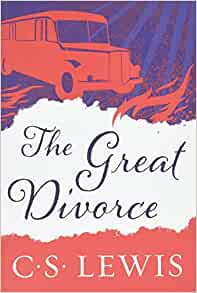


The Great Divorce, C.S. Lewis
Abby listened to this novella for the first time.
In Vital Harmony, Karen Glass
Brandy used her homework to double-count as her Scholé Every Day also.
Mansfield Park, Jane Austen
Karen is rereading her favorite Austen novel.
No silly rewards are needed
Ao many of us hit the same wall as we homeschool: a child who seems unmotivated, or motivated everywhere except the one subject that turns into daily conflict. And as we joked, if the child is twelve, some of this is simply the nature of the age. Still, we wanted to look at Charlotte Mason’s fourth principle and why she draws such hard lines around what not to do.
Principle 4: “These principles of authority and obedience are limited by respect for the personality of children.”
In plain terms: parents have real authority and children owe real obedience (that’s principle 3), but you must exercise that authority in a way that honors the child as a person, not a machine to be managed.
That’s why, under this principle, Mason warns against “motivating” children by manipulating them—things like:
- bribes and rewards (stickers, badges, treats used as leverage)
- threats and fear pressure
- vanity tactics (performing for praise, marks/grades as the point)
- suggestion or emotional control (nudging their will sideways instead of training it)
Her point isn’t “never praise” or “never enjoy a treat.” Her point is: don’t substitute external control for the child’s growing ability to choose the good because it’s good.
Of course, principle four only makes sense underneath principle one—children are born persons. Once we take that seriously, education stops being mainly about “How do I teach math?” and “What curriculum should I buy?” and becomes the bigger question: What is a person? What is education for?
Karen pushed us to see that the goal is not just knowledge transfer but the formation of character—especially the strengthening of the child’s will so he can learn to choose what is right, even when he doesn’t feel like it.
That’s why Mason prohibited certain motivators. When we replace “because this is right” with rewards, fear, praise-as-control, or other external levers, we might get the behavior—but we undermine the very thing we claim to be educating. If a child works only for the sticker chart, the badge, the candy, the grade, the threat, then we’ve taught them to bargain with duty. Eventually the reward won’t be enough, or it will disappear, and the child won’t have learned how to act from moral purpose.
Many of us were trained in systems where rewards and fear were the air we breathed: checkmarks on the board, grades as the entire point, passing the test without ever realizing we were supposed to be learning Spanish. We learned to “do school” as a game of performance. Then we reach adulthood and wonder why we struggle with self-motivation—and why we reach for the same tools with our kids.
So what do we do in a culture that gamifies everything? Karen’s answer was bracing: the only way to win is not to play. If the natural reward of memorizing math facts is ease and competence, we should not swap that out for bells, badges, and dopamine tricks. Instead, we can keep it simple, brief, and habitual—five minutes with playing cards, consistent practice, no fanfare. Not because it’s fun, but because it’s part of the work, and part of learning how to do the work.
This is where we found a crucial distinction: celebration is not the same thing as manipulation. Going out for ice cream to talk about a book you finished can be a fitting “closing feast”—unless it becomes the dangling carrot used to control compliance. When the treat becomes the tool, the relationship with the book gets displaced by the relationship with the reward.
We also asked whether this applies to us as mothers. If we gamify our own habits to shore up weak will, is that wrong? Karen offered a realistic distinction: adults can choose these supports consciously, as aids to maturity, and that is different from imposing artificial motivators onto a child whose will is still being formed. The real issue is not whether a checklist makes a sound, but whether one person is manipulating another person’s choices from the outside.
The thorniest moment came when we turned to the discouraged mom with an older child. What if you’ve used rewards, threats, and pay-for-performance for years, and now you have a twelve-plus child who won’t move without external pressure? Karen reminded us of something sobering and freeing: at that age, you can’t do it for them. You can’t “motivate” them like a small child. You must engage their will.
That changes the strategy from control to conversation. Karen cited Mandel Creighton: you can’t teach knowledge into someone; you can introduce them to a thing and persuade them why it matters. Older kids are not too young to consider the question, “How will this work out when you’re twenty-five?” They are old enough to think about the kind of person they want to be, and older kids often respond to being treated like moral agents who must choose.
And sometimes, especially for boys, accountability beyond mom helps broaden perspective. A tutor, a class, a coach, a pastor teaching Greek—something that makes education feel bigger than “mom making me do school.” Not because mom is inadequate, but because adolescence naturally demands a wider horizon.
Under all of this sat the theme we kept returning to: everyone wants practical tips, but good practice flows from good philosophy. Charlotte Mason’s own line came up: there’s nothing so practical as a great idea. If education is primarily about relationship—relationship with knowledge, with virtue, with duty, with God—then shortcuts that produce quick compliance can cost us the long goal.
We ended where we began: this is a marathon, with detours and rough seasons. That’s why principles matter. They keep us oriented when the day (or the week) goes sideways. They help us put phonics and subtraction facts in their proper place: important, yes, but always subsidiary to the formation of character, the strengthening of virtue, and the reverent respect we owe to a child’s personhood.
Mentioned in the Episode

Listen to related episodes:
SS#157 – Reward Systems in Sunday School

SS #144: De-stress with Natural Consequences

SS #140 – Rewards & Motivation
SS #119 – Rewards Revisited

Be a part of the conversation!
Discuss this podcast with other moms inside Sistership.
This was a wonderful listen, thank you! I’m curious about “playing the game” for tweens and teens. Karen mentioned that it’s okay to reward yourself for doing tasks. How do I go about this for my bigger kids? Thanks
I think the key is that they should be self-motivating. So however they choose to do that is up to them. I like the book The Self-Driven Child for some more modern examples of this type of thing.