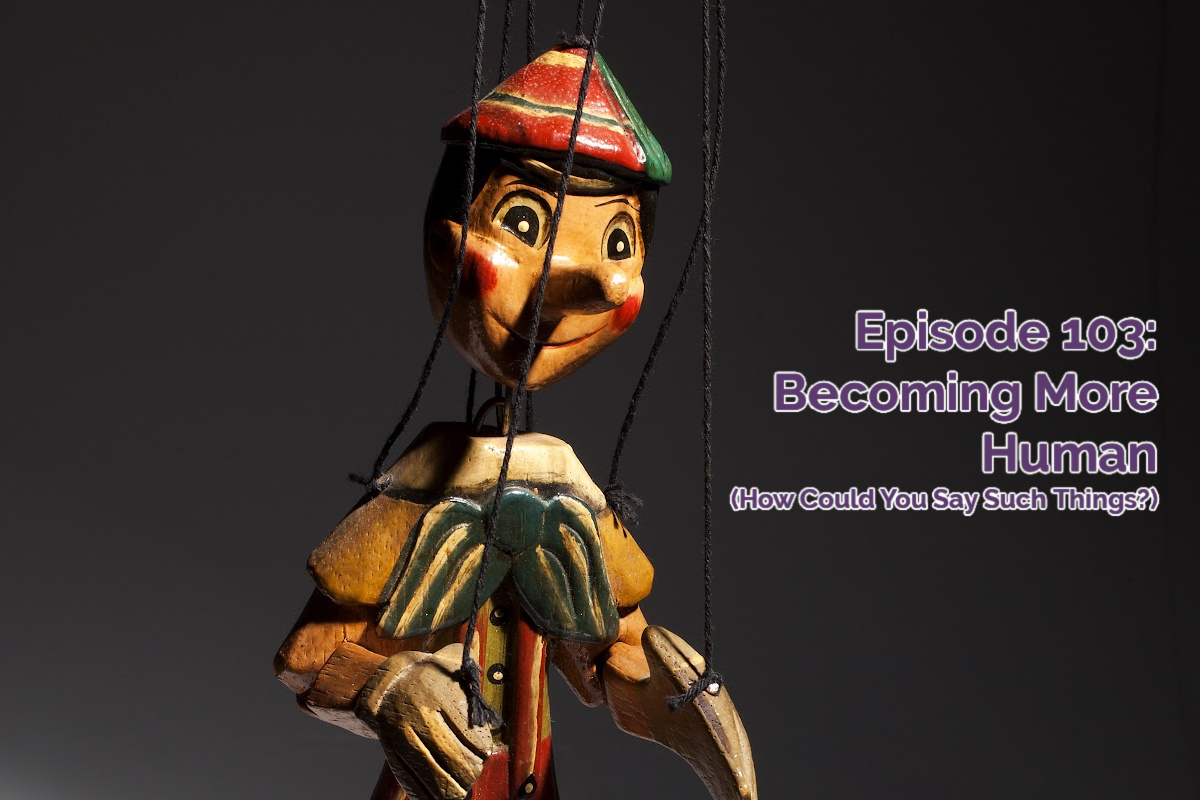
SS #103 – Becoming More Human (What?! How?!)
There is frequent talk in classical education circles about becoming more human, which can be disconcerting and easily misunderstood. Although intended to honor and elevate our humanity, what we often hear in such comments today is an implicit attack on the less educated as therefore less human.
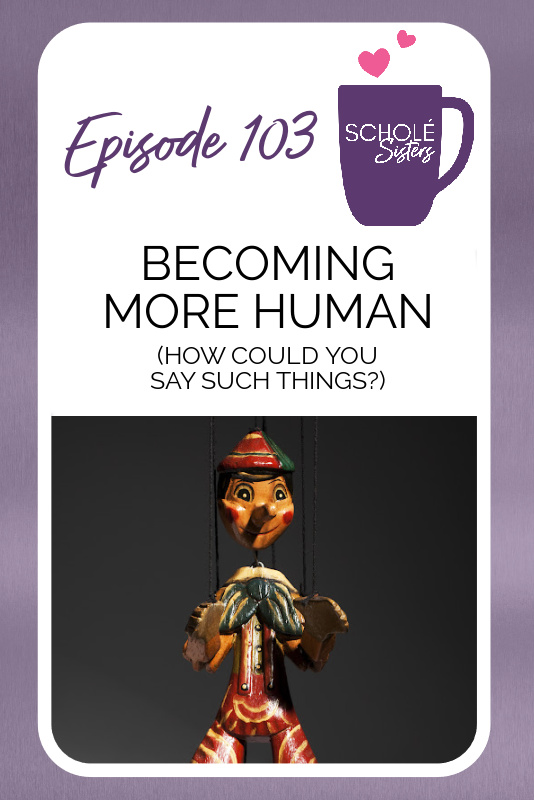
Today we tackle, qualify, and defend the statement: The goal of classical education is to make you more human.
Listen to the podcast:
TUNE IN:
Apple Podcasts | Spotify | Stitcher
How do you become more human?
Today’s Hosts and Source
Brandy Vencel
homeschools her three kids still at home in crazy, casual California.
Pam Barnhill
homeschools her three kids in the civilized South.

Mystie Winckler
homeschools her four kids still at home in the wild west state of Idaho.
Abby Wahl
homeschools her four kids on a sheep ranch in Oregon.
Scholé Every Day: What We’re Reading




The Rule of St. Augustine with commentary by Hugh of St. Victor
Mystie is reading St. Augustine’s rule was written for convents, and Hugh’s commentary applies it more broadly and deeply.
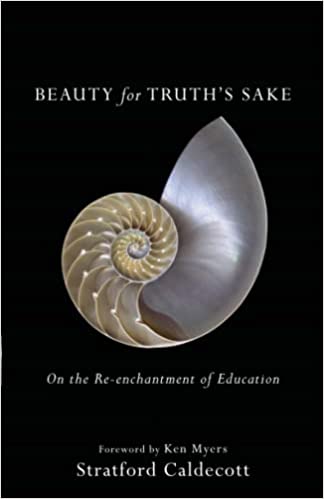
Beauty for Truth’s Sake, Stratford Caldecott
Abby is trying to cheer herself up from reading Karl Marx by reading an excellent philosophy of education.
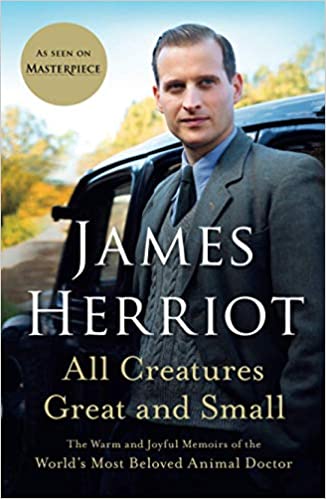
All Creatures Great and Small, James Herriot
Pam is rereading this title for pleasure reading while watching the new PBS show with her kids.
The Picture of Dorian Gray, Oscar Wilde
Brandy’s prereading is giving her a lot of food for thought about narcissism, connecting it, of course, to something Charlotte Mason said.
What does the phrase mean?
People are born fully persons, created in the image of God
Education can be a part of your sanctification, and as you are sanctified you reflect God’s image better and better.
Metaphorically, the correlary to becoming more human is to become more like an animal.
We want our children to grow into the humanity that is theirs inherently.
That education also civilizes us and our children is another way to express the same reality. Education cultivates what is truly human in our nature and gives us self-control over our more bestial appetites.
The definition of person and human
When we speak of being born persons and image-of-God humans, we’re talking about our humanity as a noun, a possession, a state.
When we speak of becoming more human, we are shifting, grammatically, to an adjective form of human, of humanness. We see the heart of that shift with the actual adjective humane. Education makes us more humane, in the full, older sense of the word.
Scripture speaks of God removing the wheat from the chaff and refining the gold to separate out the dross. These kinds of siftings produce a development of what is good and removal of what is bad, making us more of what we ought to be and less of what we ought not be.
We’re to grow up into the nature that is ours, that is uniquely human, and it doesn’t happen automatically. If left to himself, a person becomes more beast-like. We all must be intentionally
Humbled, not Elitist Humans
Part of maturing and becoming more refined and virtuous is growing in humility. Believing you are better and more human than others, comparing yourself to others, is not kind or gentle or humble.
The list of qualities of a civilized, humane person are not primarily intellectual, but primarily manners and demeanors your mama teaches you at home. It has nothing to do with intellectual advantage.
Becoming more human isn’t an attainment that you check off. You never get to the point where – tada! – you are now completely, fully human. That happens only in glory, not when you get your diploma or degree.
“The end then of learning is to repair the ruins of our first parents by regaining to know God aright, and out of that knowledge to love him, to imitate him, to be like him, as we may the nearest by possessing our souls of true virtue, which being united to the heavenly grace of faith makes up the highest perfection.”
John Milton
If being fully human is being perfect, free of sin, then there is no room for elitism because there is always more distance between the best and wisest person and perfection than there is between that person and a common, uneducated criminal.
“The coming peril is the intellectual, educational, psychological and artistic overproduction, which, equally with economic overproduction, threatens the wellbeing of contemporary civilisation. People are inundated, blinded, deafened, and mentally paralysed by a flood of vulgar and tasteless externals, leaving them no time for leisure, thought, or creation from within themselves.”
G.K. Chesterton
No room for self-esteem
It’s offensive to suggest that we are not good, but it’s true. We’re used to having our self-esteem stroked and stoked, believing that if we think well of ourselves, we’ll be better.
That is not the classical approach nor the biblical approach. We should see and know ourselves clearly, rightly, truly. We are flawed. We are full of sin and corruption. We need grace and salvation.
When we don’t acknowledge the truth of God and man, we can’t have true knowledge of self either, which means we also won’t have well-developed selves.
Education is for more than the mind
We tend to think that education is only to gain knowledge and skills for the goal of getting a job.
Education is for virtue, and that requires us to take stock of and develop our whole selves, body, mind, and soul. Virtue requires all three.
“This is our entire task: restoration of our nature and the removal of our deficiency.”
Hugh of St. Victor
Mentioned in the Episode

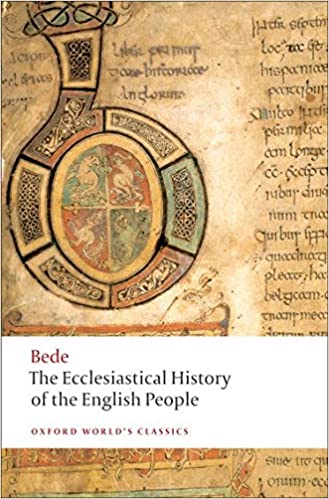
Listen to related episodes:
SS#176: Prudence, the Queen of the Virtues
SS#171: The Vice of Envy

SS#164: Teaching Courage
SS#161 – Feminism Detox