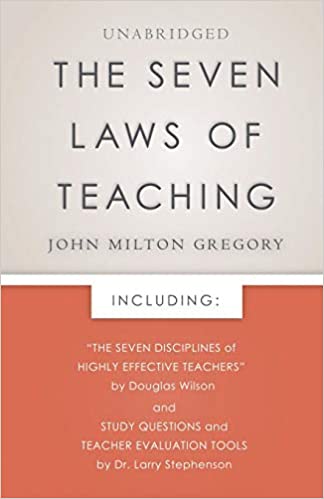
The Seven Laws of Teaching
Don't miss this vital book for teachers! For decades, John Milton Gregory's The Seven Laws of Teaching has been an essential guide for classical educators. Teachers everywhere--whether in schools, at home, in co-ops, or online--need this book. Whether you're experienced or just getting your feet wet, this edition of The Seven Laws of Teaching supplies methods and practical application for the classroom, homeschool, or online school.
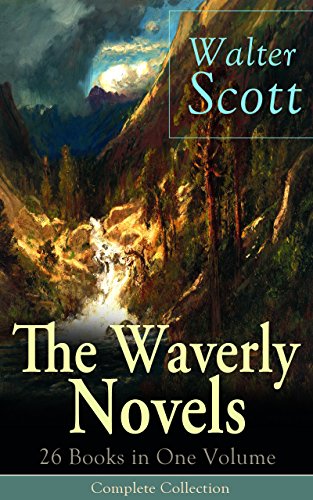
More info →The Waverly Novels
This carefully crafted ebook: "The Waverly Novels: 26 Books in One Volume - Complete Collection" is formatted for your eReader with a functional and detailed table of contents.
Table of Contents:
INTRODUCTION:
Famous Authors on Scott
SIR WALTER SCOTT AND LADY MORGAN by Victor Hugo
MEMORIES AND PORTRAITS by Robert Louis Stevenson
SCOTT AND HIS PUBLISHERS by Charles Dickens
WAVERLY NOVELS:
WAVERLEY
GUY MANNERING
THE ANTIQUARY
ROB ROY
IVANHOE
KENILWORTH
THE PIRATE
THE FORTUNES OF NIGEL
PEVERIL OF THE PEAK
QUENTIN DURWARD
ST. RONAN'S WELL
REDGAUNTLET
WOODSTOCK
THE FAIR MAID OF PERTH
ANNE OF GEIERSTEIN
Tales of My Landlord
OLD MORTALITY
BLACK DWARF
THE HEART OF MIDLOTHIAN
THE BRIDE OF LAMMERMOOR
A LEGEND OF MONTROSE
COUNT ROBERT OF PARIS
CASTLE DANGEROUS
Tales from Benedictine Sources
THE MONASTERY
THE ABBOT
Tales of the Crusaders
THE BETROTHED
THE TALISMAN
Biographies:
SIR WALTER SCOTT by George Saintsbury
SIR WALTER SCOTT by Richard H. Hutton
MEMOIRS OF THE LIFE OF SIR WALTER SCOTT by J. G. Lockhart
Sir Walter Scott (1771-1832) was a Scottish historical novelist, playwright and poet. He was the first modern English-language author to have a truly international career in his lifetime, with many contemporary readers in Europe, Australia, and North America. His novels and poetry are still read, and many of his works remain classics of both English-language literature and of Scottish literature. Famous titles include Ivanhoe, Rob Roy, The Lady of the Lake, Waverley, The Heart of Midlothian and The Bride of Lammermoor.
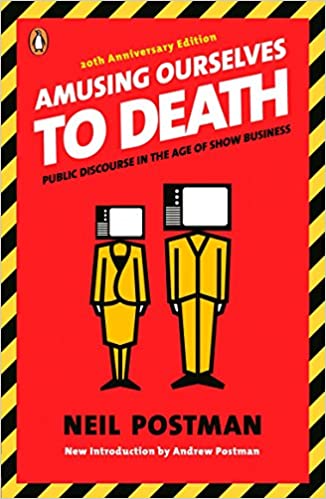
Amusing Ourselves to Death: Public Discourse in the Age of Show Business
Originally published in 1985, Neil Postman’s groundbreaking polemic about the corrosive effects of television on our politics and public discourse has been hailed as a twenty-first-century book published in the twentieth century. Now, with television joined by more sophisticated electronic media—from the Internet to cell phones to DVDs—it has taken on even greater significance. Amusing Ourselves to Death is a prophetic look at what happens when politics, journalism, education, and even religion become subject to the demands of entertainment. It is also a blueprint for regaining control of our media, so that they can serve our highest goals.
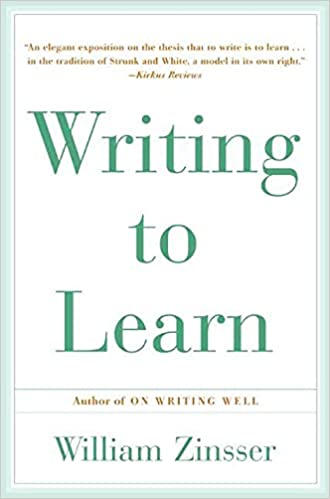
More info →Writing To Learn
This is an essential book for everyone who wants to write clearly about any subject and use writing as a means of learning.
More info →Oeconomicus
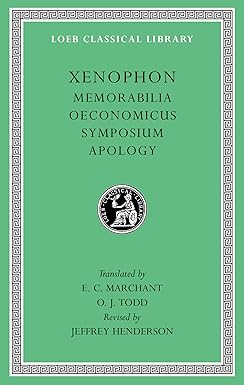
Socrates without Plato.
Xenophon (ca. 430 to ca. 354 BC), a member of a wealthy but politically quietist Athenian family and an admirer of Socrates, left Athens in 401 BC to serve as a mercenary commander for Cyrus the Younger of Persia, then joined the staff of King Agesilaus II of Sparta before settling in Elis and, in the aftermath of the battle of Leuctra in 371 BC, retiring to Corinth. His historical and biographical works, Socratic dialogues and reminiscences, and short treatises on hunting, horsemanship, economics, and the Spartan constitution are richly informative about his own life and times.
This volume collects Xenophon’s portrayals of his associate, Socrates. In Memorabilia (or Memoirs of Socrates) and in Oeconomicus, a dialogue about household management, we see the philosopher through Xenophon’s eyes. Here, as in the accompanying Symposium, we also obtain insight on life in Athens. The volume concludes with Xenophon’s Apology, an interesting complement to Plato’s account of Socrates’ defense at his trial.
More info →Fitting Words Classical Rhetoric
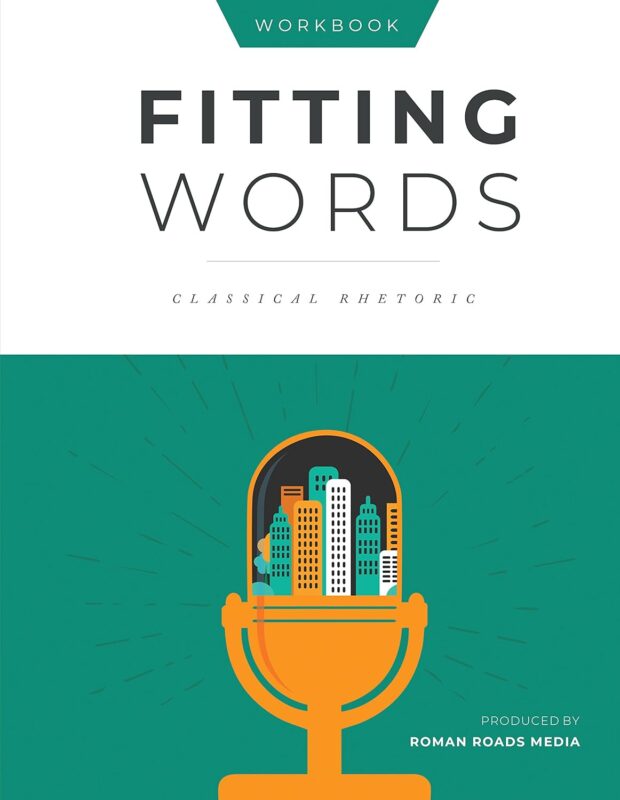
Rhetoric: The classical art of persuasive speech
What is rhetoric and why do we need to learn it? The Roman orator Cicero said the goal of rhetoric is to teach, to move and to delight, a three-fold goal that aligns well with truth, goodness and beauty. Christians are people of the Word, so we should learn this art that our words may be informative, powerful, and elegant: teaching men truth, moving them to goodness, and delighting them with verbal beauty.
FITTING WORDS instructs students in the classical art of formal rhetoric, providing them with tools for speaking that will equip them for life. Intended for high-school aged students and above, Fitting Words is a complete, robust rhetoric curriculum. Drawing from Aristotle, Quintilian, Augustine, and others, and using examples of the greatest speeches from history and scripture, this curriculum guides Christian students in the theory, imitation, and practice of persuasive speech.
"Not only should this curriculum become the standard rhetoric curriculum in our Christian schools, it should become standard reading for all upper level faculty...balanced in all the important areas: biblical wisdom, appropriate and enjoyable exercises, and a strong tether to the classical texts."
- Brian Daigle, headmaster of Sequitur Classical Academy, author of Street-Fighting Logic
Daddy-Long-Legs
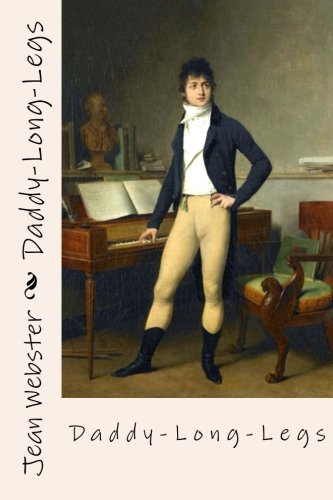
Jean Webster (pseudonym for Alice Jane Chandler Webster, July 24, 1876 – June 11, 1916) was an American writer . Her best-known books feature lively and likeable young female protagonists who come of age intellectually, morally, and socially, but with enough humor, snappy dialogue, and gently biting social commentary to make her books palatable and enjoyable to contemporary readers.
More info →