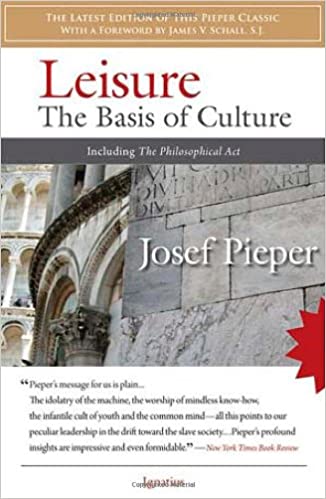
Leisure: The Basis of Culture
One of the most important philosophy titles published in the twentieth century, Josef Pieper's Leisure, the Basis of Culture is more significant, even more crucial, today than it was when it first appeared more than fifty years ago. This edition also includes his work The Philosophical Act. Leisure is an attitude of the mind and a condition of the soul that fosters a capacity to perceive the reality of the world. Pieper shows that the Greeks and medieval Europeans, understood the great value and importance of leisure. He also points out that religion can be born only in leisure -- a leisure that allows time for the contemplation of the nature of God. Leisure has been, and always will be, the first foundation of any culture. Pieper maintains that our bourgeois world of total labor has vanquished leisure, and issues a startling warning: Unless we regain the art of silence and insight, the ability for non-activity, unless we substitute true leisure for our hectic amusements, we will destroy our culture -- and ourselves.
More info →Little Women
Grown-up Meg, tomboyish Jo, timid Beth, and precocious Amy. The four March sisters couldn't be more different. But with their father away at war, and their mother working to support the family, they have to rely on one another. Whether they're putting on a play, forming a secret society, or celebrating Christmas, there's one thing they can't help wondering: Will Father return home safely?
More info →A Christmas Carol
First published on 19 December 1843 and written at a time of decline in festive tradition, A Christmas Carol became an instant classic. While the character of Ebenezer Scrooge has become the epitome of miserliness, his story of redemption reinforces expectations for Christmas Day as a time of peace and goodwill to all men.
This beautiful hardback edition makes a wonderful seasonal gift that the whole family can enjoy.
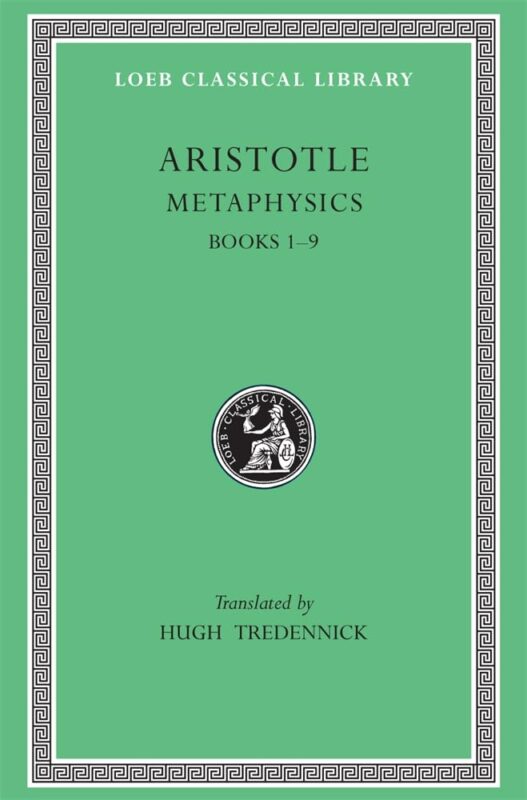
More info →Metaphysics, Volume I: Books 1–9
First things.
Aristotle, great Greek philosopher, researcher, reasoner, and writer, born at Stagirus in 384 BC, was the son of a physician. He studied under Plato at Athens and taught there (367–347); subsequently he spent three years at the court of a former pupil in Asia Minor. After some time at Mitylene, in 343–342 he was appointed by King Philip of Macedon to be tutor of his teen-aged son Alexander. After Philip’s death in 336, Aristotle became head of his own school (of “Peripatetics”), the Lyceum at Athens. Because of anti-Macedonian feeling there after Alexander’s death in 323, he withdrew to Chalcis in Euboea, where he died in 322.
Nearly all the works Aristotle prepared for publication are lost; the priceless ones extant are lecture-materials, notes, and memoranda (some are spurious). They can be categorized as follows:
I Practical: Nicomachean Ethics; Great Ethics (Magna Moralia); Eudemian Ethics; Politics; Economics (on the good of the family); On Virtues and Vices.
II Logical: Categories; Analytics (Prior and Posterior); Interpretation; Refutations used by Sophists; Topica.
III Physical: Twenty-six works (some suspect) including astronomy, generation and destruction, the senses, memory, sleep, dreams, life, facts about animals, etc.
IV Metaphysics: on being as being.
V Art: Rhetoric and Poetics.
VI Other works including the Constitution of Athens; more works also of doubtful authorship.
VII Fragments of various works such as dialogues on philosophy and literature; and of treatises on rhetoric, politics, and metaphysics.
The Loeb Classical Library edition of Aristotle is in twenty-three volumes.
More info →