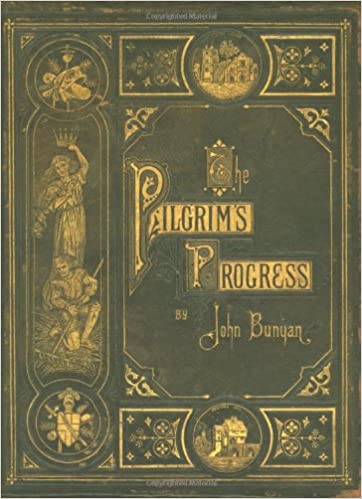
The Pilgrim’s Progress
Boasting 860 pages, Bunyan's compilation has been meticulously reproduced from a 125 year old manuscript, keeping its vintage double-column format, large print, and font. A rare keepsake worthy of any library, this edition of Pilgrim's Progress includes these five classics by John Bunyan.
- THE HOLY WAR (Page 377 - 684) A discourse of trial made by Shaddai upon Diabolus, for the Regaining the Metropolis of the World; or, the losing and taking again of the Town of Man-soul.
- GRACE ABOUNDING TO THE CHIEF OF SINNERS (Page 685 - 688) A detailed and faithful account of the Life of John Bunyan including his imprisonment, recovery and conversion to becoming a faithful follower of Jesus Christ.
- THE IMPRISONMENT AND RELEASE OF JOHN BUNYAN (Page 689 - 703) --includes dialgoue with Dr. Lindale and the Justices; examination by the Justices, and by Mr. Cobb, the clerk of the peace; interview with his wife and Judge Hale.
- BUNYAN'S DYING SAYINGS (Page 704 - 767) --Of sin; of affliction; repentance and coming to Christ; of prayer; Lord's day and daily duties; love of the world; of suffering; death and judgment; the joys of heaven and torments of hell.
- CHRISTIAN BEHAVIOUR; (Page 768 - 800) thoughts concerning true Christianity and how to walk so as to please God.
Also included are footnotes, commentary, and Scripture references missing in the small paperback editions of Pilgrims Progress.
Bunyan's Pilgrim's Progress with featured writings is the size of a family Bible. It is dressed in a golden-embossed hard cover with gold-tipped, parchment-like paper and satin ribbon bookmark. Fine art quality, full color as well as black and white illustrations are found throughout.
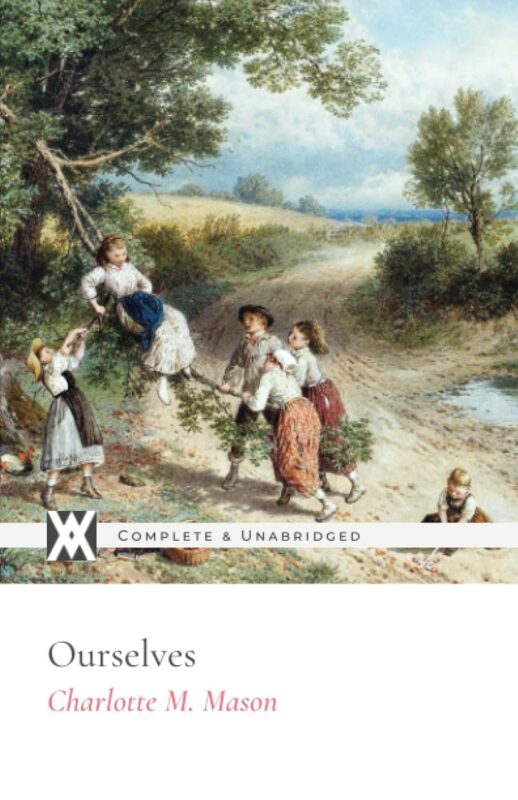
More info →Charlotte Mason’s Ourselves (Book 4 of the Home Education Series)
Ourselves, the fourth volume of Charlotte Mason's Classic Homeschooling Series, is a character curriculum book written directly to children. Book I, Self-Knowledge, is for elementary school students; Book II, Self-Direction, is for older students. Self-Knowledge discusses our human desires and appetites; the "helpers" in our minds, such as intellect, sense of beauty, imagination, and reason; the ways in which we feel and express love for others, including sympathy, kindness, generosity, gratitude, courage, loyalty, and humilty; and truth, justice, and integrity; and ends by encourages children to develop the habit of being useful. Self-Direction is an in-depth discussion of the conscience and virtues such as temperance, chastity, fortitude, and prudence; the will and self-control; and the soul and its capacities, such as prayer, thanksgiving, faith, and praise. Charlotte Mason was a late nineteenth-century British educator whose ideas were far ahead of her time. She believed that children are born persons worthy of respect, rather than blank slates, and that it was better to feed their growing minds with living literature and vital ideas and knowledge, rather than dry facts and knowledge filtered and pre-digested by the teacher. Her method of education, still used by some private schools and many homeschooling families, is gentle and flexible, especially with younger children, and includes first-hand exposure to great and noble ideas through books in each school subject, conveying wonder and arousing curiosity, and through reflection upon great art, music, and poetry; nature observation as the primary means of early science teaching; use of manipulatives and real-life application to understand mathematical concepts and learning to reason, rather than rote memorization and working endless sums; and an emphasis on character and on cultivating and maintaining good personal habits.
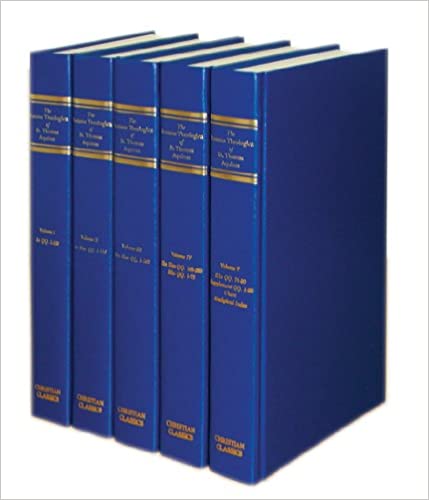
More info →The Summa Theologica of St. Thomas Aquinas
The Summa Theologica, St. Thomas Aquinas' brilliant synthesis of Christian thought, has had a decisive and permanent impact on philosophy and religion since the thirteenth century. As the title indicates, is a summing up of all that can be known about God and humanity's relations with God. Divided into three parts, the work consists of 38 tracts, 631 questions, about 3000 articles, 10,000 objections and their answers. This complete edition of the work, published in five volumes, was translated into English by the Fathers of the Dominican Province and first appeared in 1911. A revised edition was published in London in 1920, and in America in 1947. The Christian Classics edition is a reproduction of the 1947 Benziger Brothers edition.
More info →Bad Therapy: Why the Kids Aren’t Growing Up
In virtually every way that can be measured, Gen Z’s mental health is worse than that of previous generations. Youth suicide rates are climbing, antidepressant prescriptions for children are common, and the proliferation of mental health diagnoses has not helped the staggering number of kids who are lonely, lost, sad and fearful of growing up. What’s gone wrong with America’s youth?
In Bad Therapy, bestselling investigative journalist Abigail Shrier argues that the problem isn’t the kids—it’s the mental health experts. Drawing on hundreds of interviews with child psychologists, parents, teachers, and young people, Shrier explores the ways the mental health industry has transformed the way we teach, treat, discipline, and even talk to our kids. She reveals that most of the therapeutic approaches have serious side effects and few proven benefits. Among her unsettling findings:
- Talk therapy can induce rumination, trapping children in cycles of anxiety and depression
- Social Emotional Learning handicaps our most vulnerable children, in both public schools and private
- “Gentle parenting” can encourage emotional turbulence – even violence – in children as they lash out, desperate for an adult in charge
Mental health care can be lifesaving when properly applied to children with severe needs, but for the typical child, the cure can be worse than the disease. Bad Therapy is a must-read for anyone questioning why our efforts to bolster America’s kids have backfired—and what it will take for parents to lead a turnaround.
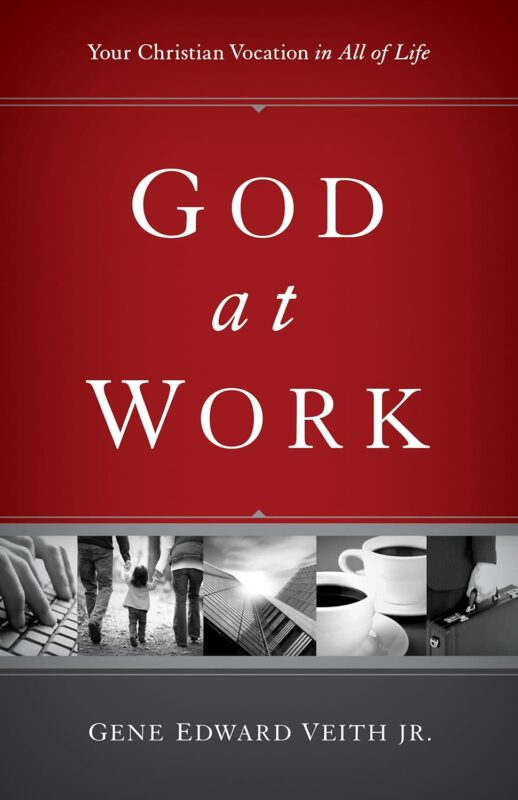
More info →God at Work
Work can be a daily grind―a hard, monotonous set of thankless tasks. In the midst of the ongoing toil, many are plagued by a lack of purpose, confused as to what to do and who to become. And while some of our vocations may seem more overtly meaningful than others’, the truth is that most of us work because we have to. It is a means to an end―survival.
Given the enormous amount of time each of us spends working, we would do well to understand our callings and how God works through them.
Here culture expert Gene Veith gives us more than a simple understanding of work―more than a catchy slogan to “do all things for the glory of God.” He outlines a spiritual framework for answering questions such as:
- What does it mean to be a Christian businessperson or a Christian artist or a Christian lawyer, scientist, construction worker or whatever?
- How can I know what I am supposed to do with my life?
- What does it mean to raise a Christian family? And what if I don’t have kids?
Unpacking the Bible’s teaching on work, Veith helps us to see the meaning in our vocations, the force behind our ethics, and the transformative presence of God in our everyday, ordinary lives.
More info →The Unselected Journals of Emma M. Lion
“I’ve arrived in London without incident. There are few triumphs in my recent life, but I count this as one. My existence of the last three years has been nothing but incident.”
The Year is 1883 and Emma M. Lion has returned to her London neighborhood of St. Crispian’s. But Emma’s plans for a charmed and studious life are sabotaged by her eccentric Cousin Archibald, her formidable Aunt Eugenia, and the slightly odd denizens of St. Crispian’s.
Emma M. Lion offers up her Unselected Journals, however self-incriminating they may be. Armed with wit and a sideways amusement, Emma documents the curious realities of her life at Lapis Lazuli House.
Readers have compared Beth Brower's writing to Jane Austen, Oscar Wilde, P.G. Wodehouse, and L. M. Montgomery.
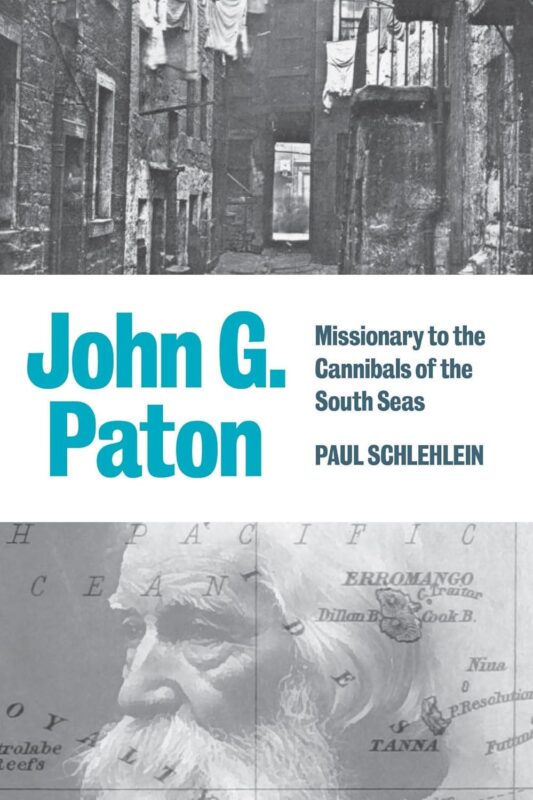
More info →John G. Paton
'I am grateful to Paul Schlehlein for providing a new look at the life and ministry of John G. Paton. Early in my life I was enduringly impacted by Paton's autobiography edited by his brother, James. The story was a stunning account of dedication, desperation, sacrifice at the most extreme level, and selfless love to Christ. I was marked for life by the amazing missionary adventure and the far reaching and lasting gospel impact of that one man empowered and protected by the Holy Spirit. In this age when giving a trophy to everyone is standard, and when minimal Christian dedication is celebrated, all believers need to go back to the past to see what true devotion to Christ and the gospel really looks like. You will see it in John Paton.'
--JOHN MACARTHUR
More info →Courage: How the Gospel Creates Christian Fortitude
Throughout Scripture, important biblical figures have faced numerous adversities with remarkable courage. In the New Testament, the apostles endured persecution, imprisonment, and even death for spreading the good news of the gospel. Yet, amid their struggle, they continued to expand the kingdom of God―even rejoicing as they suffered for Christ. How can believers exhibit this same courage today?
In Courage, author Joe Rigney explores the Christian virtue of fortitude and its connection to the gospel. From a theological perspective, Rigney argues that courage―used in the proper context―is a sign of God’s salvation and a believer’s faith in Christ. In this concise and practical book, readers will defeat feelings of anxiety, anger, and fear as they gain boldness from God to endure all of life’s circumstances.
- Explores Christian Fortitude: How the gospel shapes this important Christian virtue
- Practical Study: This concise guide encourages Christians to build up their boldness through Christ
- A Part of the Growing Gospel Integrity Series: Created in partnership with Union School of Theology
- Written by Joe Rigney: Author of The Things of Earth; Strangely Bright; and More Than a Battle: How to Experience Victory, Freedom, and Healing from Lust.
The Strenuous Life
Teddy Roosevelt's Historic Guide to Living Life to the Fullest
In 1899 Theodore Roosevelt was Governor of New York and gave a stirring speech on his philosophy of living a most productive life. Based on his own experiences, Roosevelt defined the American ethos of overcoming hardship and hard work in a compelling speech only Teddy could produce. Part of Applewood's "Books of American Wisdom" series, this elegant hardback is a perfect gift for any occasion.
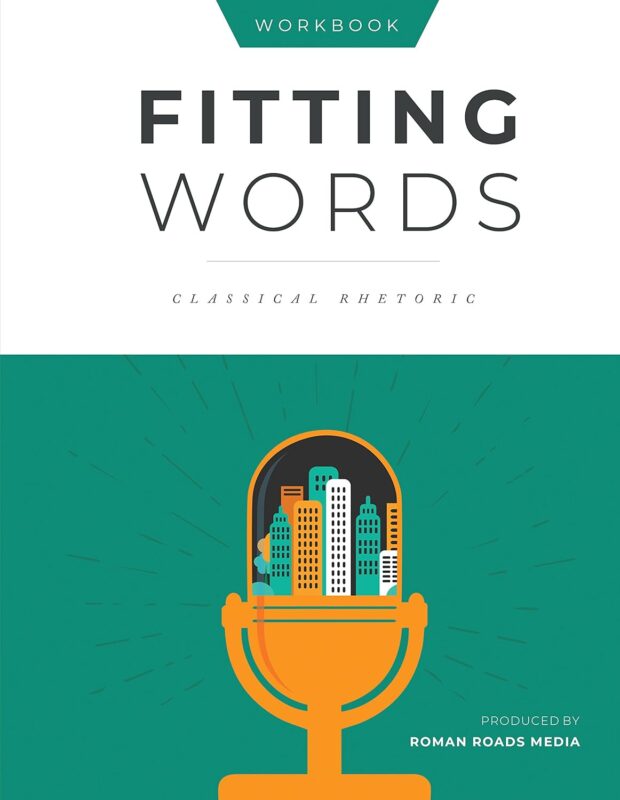
More info →Fitting Words Classical Rhetoric
Rhetoric: The classical art of persuasive speech
What is rhetoric and why do we need to learn it? The Roman orator Cicero said the goal of rhetoric is to teach, to move and to delight, a three-fold goal that aligns well with truth, goodness and beauty. Christians are people of the Word, so we should learn this art that our words may be informative, powerful, and elegant: teaching men truth, moving them to goodness, and delighting them with verbal beauty.
FITTING WORDS instructs students in the classical art of formal rhetoric, providing them with tools for speaking that will equip them for life. Intended for high-school aged students and above, Fitting Words is a complete, robust rhetoric curriculum. Drawing from Aristotle, Quintilian, Augustine, and others, and using examples of the greatest speeches from history and scripture, this curriculum guides Christian students in the theory, imitation, and practice of persuasive speech.
"Not only should this curriculum become the standard rhetoric curriculum in our Christian schools, it should become standard reading for all upper level faculty...balanced in all the important areas: biblical wisdom, appropriate and enjoyable exercises, and a strong tether to the classical texts."
- Brian Daigle, headmaster of Sequitur Classical Academy, author of Street-Fighting Logic
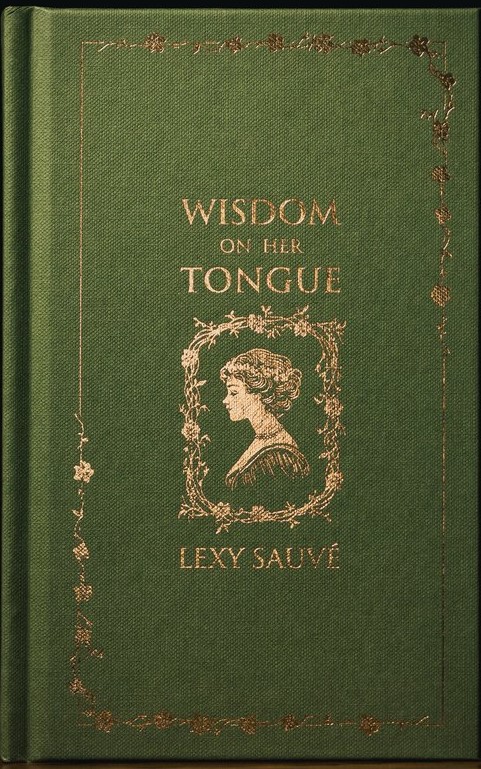
Wisdom on Her Tongue
Wisdom on Her Tongue: Tips for Getting Back Your Weekends & Holidays & Learning to Communicate Effectively in Marriage is a candid, biblically grounded manual for Christian wives who desire to grow in spiritual maturity and relational wisdom. Framed by the call of Proverbs 31 and Titus 2, the book argues that a woman’s ability to communicate with grace, respect, and restraint is one of the bellwethers of a successful Christian marriage. Does she often reach for the tools of manipulation, sarcasm, and emotional impulsivity? Or does she instead favor meekness, patience, clarity, and Christian charity? The answer will likely reveal whether a woman is building up her household—or tearing it down.
The book is structured as a series of short, pointed chapters covering topics like anger, respect, honor, and self-control, often encouraging women toward the hard, good work of cultivating a gentle and quiet spirit. Sauvé urges readers to break generational cycles of bitterness and drama by pursuing habits that bring peace into the home. The tone of the book is both kind and direct, offering correction with warmth and Christian hope. With a forward and closing exhortation from her husband, Pastor Brian Sauvé, the book serves as both a rebuke and a rallying cry for women seeking to become crowns to their husbands and builders of flourishing Christian households.
More info →